
Recommended Audience: None.
Opinion: Wishing I Could Recommend, But I CAN’T (See Below.)
– There are so many positive messages here about coping with anxiety, repairing friendships, finding where you belong, etc.
– Advisories for recurring scenes of dating and a couple of LGBT+ inferences, among other more minor issues
Details:
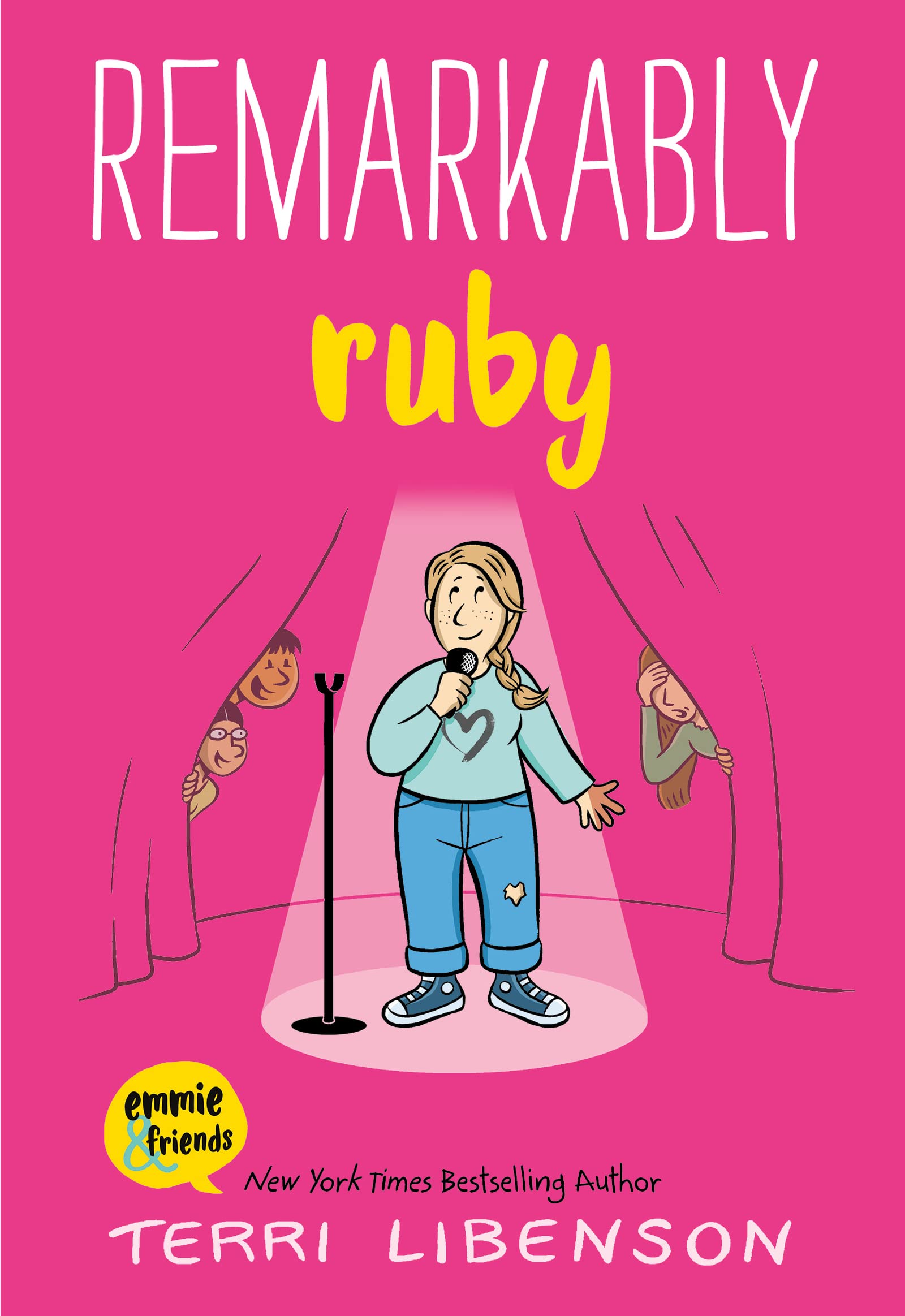
I really sat with this book for awhile agonizing over whether or not to put it on my list of “approved” books and ultimately, I had to say no, especially given that the target audience is middle school. The story is a dual perspective between two former friends Mia and Ruby who have grown apart over the years. Ruby feels socially awkward and struggles to fit in with her peers. Mia desperately wants to become class president, inasmuch so that she loses sight of what’s important: her relationships with the people she cares for. Mia and Ruby’s animosity hits a fever pitch culminating in a shoving match at school. Afterwards, they are forced to work together as a punishment and it’s there that they are able to begin to repair their friendship and move in a positive direction.
Look, this book has a lot of positive messages. I feel like middle school readers, especially girls, would relate a lot with the drama and the struggles of either Ruby or Mia, or perhaps a bit of both, as they navigate middle school friendships. I loved how Ruby was able to find her confidence through a newly-formed Poetry Club and that the author was able to work in poetry as a form of self-expression, art, and belonging. I appreciated how Mia was able to reflect on her past behavior and work to repair relationships that she had hurt. The close connections both girls had with their parents, including Ruby’s overly-eager and quirky mom (who amused me quite a bit!) was endearing. I really liked how the illustrator used a unique artistic style when depicting Mia’s narratives versus Ruby’s narratives. The story has quite a few elements of humor too, so I found myself chuckling along as I read.
While there is a lot to be gained here, unfortunately this book contains a few too many elements of questionable content, particularly frequent references to a boyfriend and a couple of LGBT+ inferences, therefore I can’t in good conscience recommend this book. Some families may be okay with allowing their middle schooler to read this book coupled with a guided discussion (which I personally would respect), but as a stand alone without guidance, I can’t recommend it. High school readers may be okay to read this as they have likely already come across these issues before.
Additional Advisories:
- one mention of a money tree that is supposed to bring “good fortune” (I didn’t think this was meant literally) (p. 6)
- recurring discussion about Mia’s boyfriend Trevor, including when they first kissed (and that they’ve improved since then) (p. 32-35 and several more)
- one character, Juan, writes a song that is meant as a simile for his affection for another male peer (p. 227-228), later (p. 242-243) Ruby asks Juan more about this and they have another brief conversation about his male love interest
- middle school characters being dishonest with parents about where they claimed to be (p. 232)
- mild language (e.g. stupid, jerk)
- Ruby’s dad (cartoon) is portrayed in his underwear from the back (p. 204)
- another mention of kissing someone in the fourth grade (p. 258)
Discover more from Illuminated Pages
Subscribe to get the latest posts sent to your email.

 Illuminated Pages