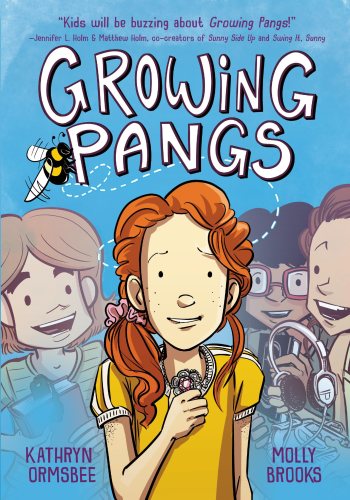
Growing Pangs (Graphic Novel)

Recommended Audience: Middle School and Up

Opinion: Definitely Recommend!

This is a squeaky clean book that portrays the reality of a young girl with obsessive-compulsive disorder. The book offers opportunities for readers to learn about OCD, see how Katie navigates changing friendships, and more!

I was grasping at straws for advisories on this one: a few incidences of mild crude language (e.g. sucks), a few pop culture references, and a mention of girls being too young to drink an alcoholic beverage.

Details:

The first thought I had after reading this graphic novel is “Tell me she has more books like this one!” It was so wholesome, and 99.9% squeaky clean. I came to find that the author does have a few other books, not all will be suitable for our audiences, but that’s a story for another day.
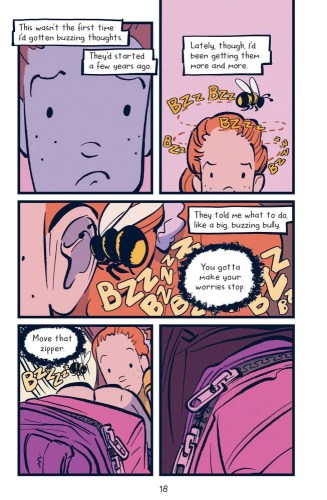
Regarding this book, I definitely recommend it! The plot is based off of the author’s real-life experiences as a homeschooled Middle Schooler living with anxiety and obsessive-compulsive disorder. At first, Katie doesn’t have a diagnosis and doesn’t understand why she feels the need to engage in her compulsions. She refers to her intrusive thoughts as “buzzing” and anthropomorphizes the thoughts as bees swarming around her. It isn’t until the very last bit of the book that the reader learns what these buzzing bees represent. This may be confusing and upsetting for younger readers not familiar with OCD. I would imagine that some young readers might even conjecture that Katie is experiencing whispers from the shayateen. Therefore, I would recommend this book for Middle School or older. If a younger reader wanted to read this book, a guided discussion about OCD would be a sufficient prelude for them to dive in.

As a book reviewer who seeks out books that have very little questionable content that are still relevant and engaging for our youth, I was relieved to find that this book fit the bill. Katie is a wholesome homeschooled girl who attends co-op and church with her family. She loves reading and is excited to be casted into a musical theatre production of Madeline. I can imagine many of the audience reading this may also homeschool, so it is nice to have a book that many of our children will relate to. Katie has to navigate changing friend circles and the jealousies that can come with that. I like how the author relays that many people have their own unique invisible struggles and that Katie is not alone in this way. She has a good relationship with her parents–not one moment of back-talk or disrespect! When Katie finally talks with them about her “buzzing” thoughts, they were supportive and quick to get her the help she needed. While the book ends abruptly with Katie entering a psychologist’s office, the Author’s Note provides clarity and conclusions that the book doesn’t.

Advisories: mile crude language (e.g. suck[s]), occasional pop culture references (Weezer, Harry Potter, *NSync), the girls say they’re “too young” to drink Mint Juleps (alcoholic beverage)

Be Prepared (Graphic Novel)

Recommended Audience: Ages 14+

Opinion: Neutral with Advisories

Potential Benefits of Reading This: develop a sense of empathy, learn about a different culture (Russian Orthodox) and experiences (sleep away camp)

Advisories: bullying, trauma, hazing, crude language

Details: I feel that it is very important for readers to read about different cultures and backgrounds. It helps develop empathy, a broader worldview, and makes us better people in my humble opinion. For this reason, I took the dive and read Be Prepared by Russian American author Vera Brosgol. The story is based on an amalgamation of the author and her friend’s real experiences attending Russian youth camps in upstate New York. I feel that the biggest takeaway from reading this book is hopefully readers will develop a strong sense of empathy and pity for Vera and all that she experienced. The book is sad and Vera’s memories are frankly somewhat traumatic.

At camp, Vera experiences many struggles trying to fit in with the older girls at camp and witnesses many instances of bullying. As a reader, you can’t help but have your heart go out to her for all the awful things she is experiencing or witnessing. The book does not end with some great moral lesson or turn of events, in fact Vera doesn’t think she ever wants to go to camp again. In some ways, I appreciated that for what it was. At the end of the book, the author has a note for the readers explaining that she did not have positive experiences at camp and she really did struggle to make friends. I really appreciated her sharing that perspective because life really isn’t rosy all the time and that’s something to reflect upon.

That being said, there are definitely some factors that parents should consider when deciding whether or not they would want their child to read this. First of all, the experience of going to sleep away camp for weeks at a time may be something that Muslim parents don’t even want their children to read about as it is not something that they would want their children to experience for themselves. However, overall the experiences the author describes are not particularly pleasant so it might actually work in parents’ favor. There are several incidences of bullying, borderline hazing, that are described in the book, including a time where one of the character’s period-stained underwear are put on display on the flag post to humiliate her. Lastly, there are some depictions and promotion of Russian Orthodox religious beliefs and practices that some parents may not be comfortable with their child reading. I would definitely not recommend this book for elementary children at all. Perhaps a mature Middle School student may be able to read this with parental guidance.

In conclusion, would I let a high school student read this? Yes, I would, because I feel like there are some benefits there and hopefully a good discussion to follow. Would I necessarily recommend this book to others or put it in an Islamic school library? No, I would not.

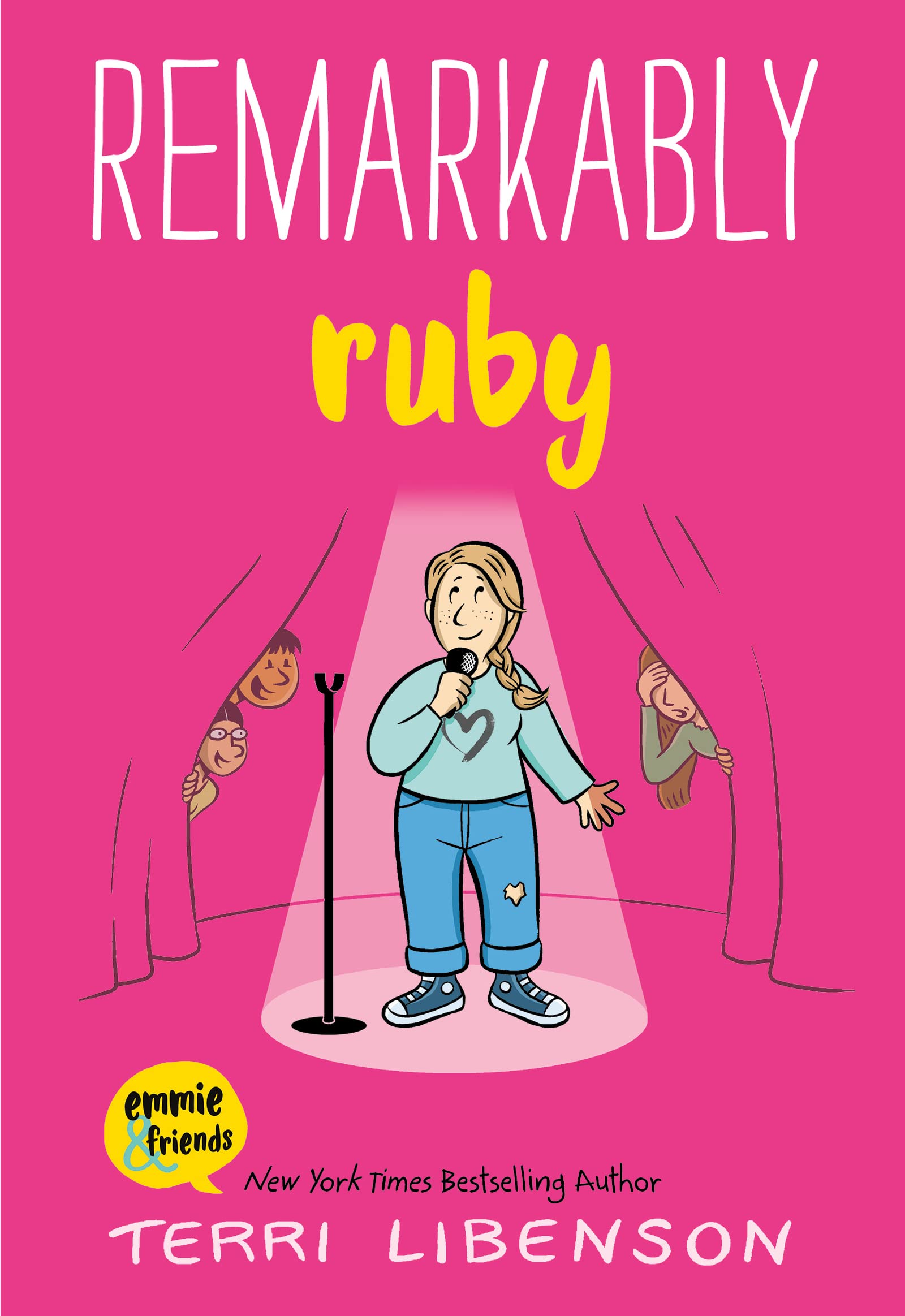
Remarkably Ruby (Graphic Novel)

Recommended Audience: None.

Opinion: Wishing I Could Recommend, But I CAN’T (See Below.)

– There are so many positive messages here about coping with anxiety, repairing friendships, finding where you belong, etc.

– Advisories for recurring scenes of dating and a couple of LGBT+ inferences, among other more minor issues

Details:

I really sat with this book for awhile agonizing over whether or not to put it on my list of “approved” books and ultimately, I had to say no, especially given that the target audience is middle school. The story is a dual perspective between two former friends Mia and Ruby who have grown apart over the years. Ruby feels socially awkward and struggles to fit in with her peers. Mia desperately wants to become class president, inasmuch so that she loses sight of what’s important: her relationships with the people she cares for. Mia and Ruby’s animosity hits a fever pitch culminating in a shoving match at school. Afterwards, they are forced to work together as a punishment and it’s there that they are able to begin to repair their friendship and move in a positive direction.

Look, this book has a lot of positive messages. I feel like middle school readers, especially girls, would relate a lot with the drama and the struggles of either Ruby or Mia, or perhaps a bit of both, as they navigate middle school friendships. I loved how Ruby was able to find her confidence through a newly-formed Poetry Club and that the author was able to work in poetry as a form of self-expression, art, and belonging. I appreciated how Mia was able to reflect on her past behavior and work to repair relationships that she had hurt. The close connections both girls had with their parents, including Ruby’s overly-eager and quirky mom (who amused me quite a bit!) was endearing. I really liked how the illustrator used a unique artistic style when depicting Mia’s narratives versus Ruby’s narratives. The story has quite a few elements of humor too, so I found myself chuckling along as I read.

While there is a lot to be gained here, unfortunately this book contains a few too many elements of questionable content, particularly frequent references to a boyfriend and a couple of LGBT+ inferences, therefore I can’t in good conscience recommend this book. Some families may be okay with allowing their middle schooler to read this book coupled with a guided discussion (which I personally would respect), but as a stand alone without guidance, I can’t recommend it. High school readers may be okay to read this as they have likely already come across these issues before.

Additional Advisories:

  • one mention of a money tree that is supposed to bring “good fortune” (I didn’t think this was meant literally) (p. 6)
  • recurring discussion about Mia’s boyfriend Trevor, including when they first kissed (and that they’ve improved since then) (p. 32-35 and several more)
  • one character, Juan, writes a song that is meant as a simile for his affection for another male peer (p. 227-228), later (p. 242-243) Ruby asks Juan more about this and they have another brief conversation about his male love interest
  • middle school characters being dishonest with parents about where they claimed to be (p. 232)
  • mild language (e.g. stupid, jerk)
  • Ruby’s dad (cartoon) is portrayed in his underwear from the back (p. 204)
  • another mention of kissing someone in the fourth grade (p. 258)

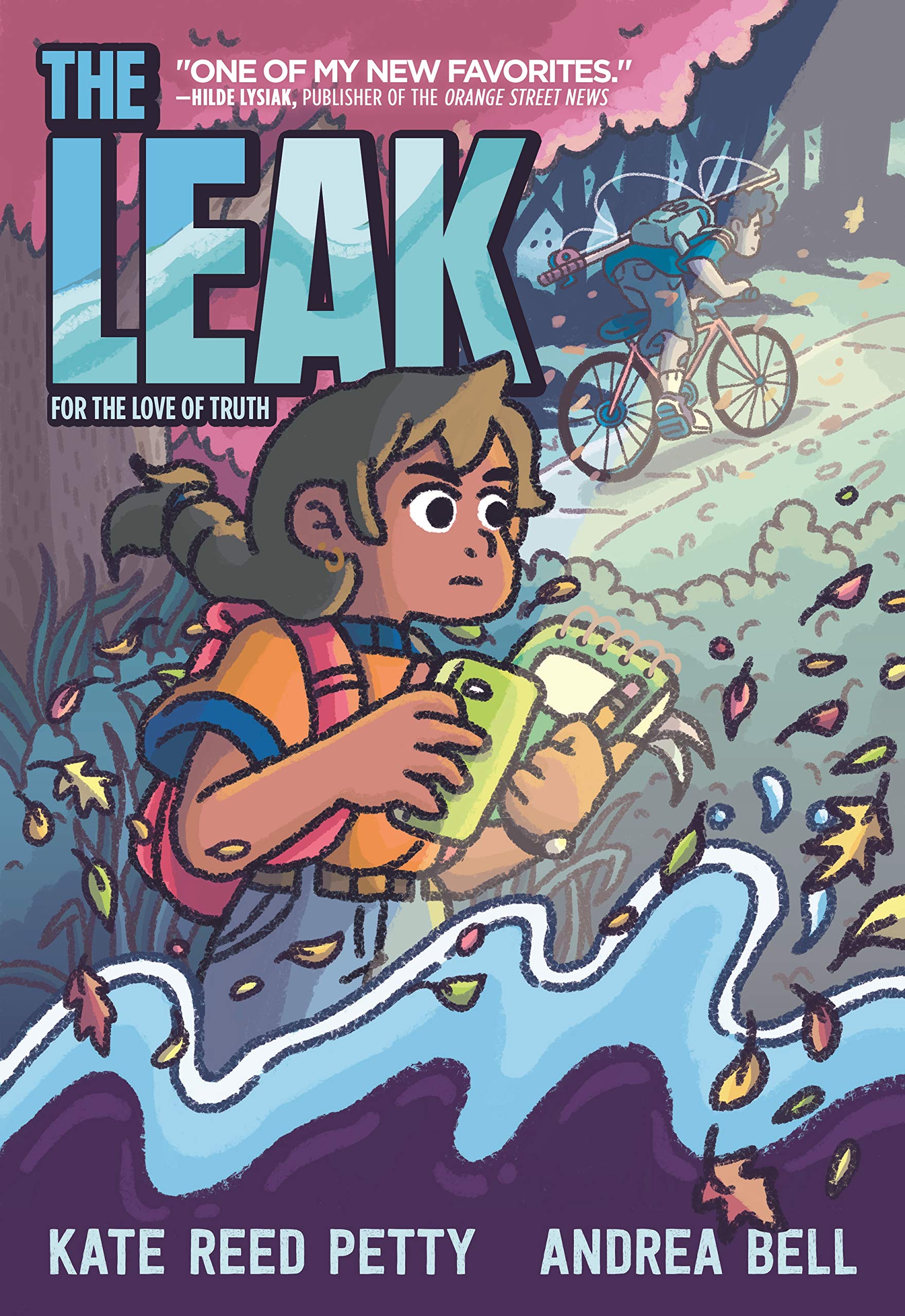
The Leak (Graphic Novel)

Recommended Audience: Ages 9+

Opinion: Recommended with Advisories.

– Recommended for many strong positive messages regarding journalistic integrity, ethics, awareness about the Flint Water Crisis, and more!

– Advisories for a depicted kissing scene and talks about dating.

Details:
I love when a graphic novel talks about real world issues in a way that makes them tangible for young readers. This book does that. It tells a fictional tale of a city that has polluted water and Ruth, a budding journalist who investigates the matter. I love that the book shows how a young person with determination can really make a big impact; a great message for young readers! The book touches on the real-world water pollution situation in Flint, Michigan. There are many more lessons to take away from this book such as having integrity in what we say and write, that there are consequences for actions that we take even if we think we are serving the better good, that we shouldn’t take advantage of others to serve our agendas, and so much more.

Regarding advisories, the book has sporadic discussions about dating and crushes, and the kissing that is depicted between the main character and her crush on pages 207-208. Also, it mentions in the beginning that Ruth’s older college-aged brother will be moving in with his girlfriend, but ultimately that doesn’t end up working out in the end anyways (they break up after moving in together) so there may be a lesson there too.  I believe that despite these few advisories, this book is definitely worth reading and your reader will benefit from having read the book.  As an added bonus, there are multiple hijabis in the illustrations which was a lovely treat.

Was this review helpful?