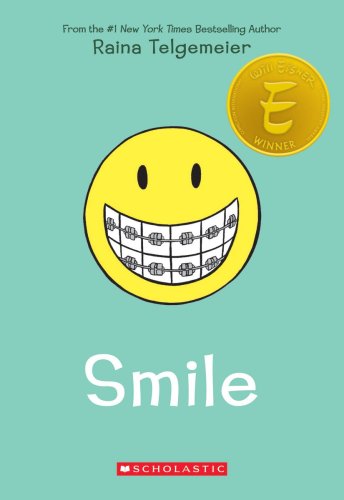
Smile (Graphic Novel)

Recommended Audience*: None.

Opinion: Do not recommend.

Synopsis: A perfect example of why book screening is really important in today’s day and age, Smile looks innocuous with it’s brace-faced smile emoji. What readers might not be aware of is how crushes are a central theme of this book, and therefore one that I didn’t feel comfortable keeping in my library.

Advisories: name-calling/teasing, romantic interests/crushes (major theme), mixed gender interactions (i.e. school dance, parties), cruel pranks, kissing, and more

Details:

I feel like Raina Telgemeier books are hit-or-miss when it comes to being appropriate for our readers. I love that she has made several books on real-life struggles that she had growing up. Many readers will be able to relate with the challenges of middle school and beyond. I can imagine so many readers find resonance and healing by reading her words. Unfortunately, many of her books however contain themes that many in our community feel are not appropriate such as a heavy emphasis on romantic interests/crushes as well as the introduction of LGBTQ+ characters and romance.

In this instance, this is a book that I couldn’t deem appropriate for our readers. While I love all that Telgemeier shares about her experience with a life-altering dental injury, I couldn’t justify recommending this book considering the other major theme: crushes/romantic interests. Page after page discusses different character’s romantic interests, their dreams of their first kiss, and even depicts a scene of playing “Spin the Bottle” at a mixed-gender party.

It’s a shame because there are some good elements here. I really appreciated how Telgemeier portrays the impacts of school bullies, even those who claim to be “friends.” I love how in the end, main character Raina stands up for herself and finds a new circle of friends, who actually build her up rather than tearing her down and making her the victim of their cruel pranks. Middle school and the beginning of high school are such trying times for so many. I think that readers will definitely empathize with Raina’s experience and hopefully take away that they would never want to be responsible for someone else feeling how she did.

Despite the benefits here, the crushes/romantic elements were too much for me and I didn’t feel like I could justify recommending this book to others, or encouraging my middle schooler to read it.

Things I Liked:

  • depicting the harms of bullying/teasing
  • sharing the feelings related to having an injury that impacts your physical appearance
  • standing up to bullies (p. 191)
  • finding your own way and friends, instead of trying to fit in with the crowd (p. 206-7)

Detailed Advisories:

  • reference to Easter (p. 4)
  • blood depicted (p. 9)
  • mild crude language– jerk (p. 27)
  • name-calling (p. 29, 53)
  • girls expressing desire to hang out with boys (p. 51)
  • main character expressing that she wishes boys liked her (p. 52)
  • romantic interests/crushes (recurring) (p. 60-1, 79, 83, 131-2, 135)
  • teasing (p. 83, 185)
  • discussion about the tooth fair (p. 99-101)
  • dating/girlfriends-boyfriends (p. 112, 114, 155
  • gender interactions – school dance, parties (p. 119-20, 158-62, 209-12)
  • kissing (p. 132, 158-9)
  • cruel pranks (p. 136-139, 186-7)
  • bare midrift & “tube top” (p. 138)
  • flirting (p. 156)

Note: This list of advisories is not exhaustive and may not capture every instance of questionable content, but rather is intended to give an overall sense of the content of the book.

*Note: While we do not recommend this book, the intended audience indicated by the author/publisher is Middle School.

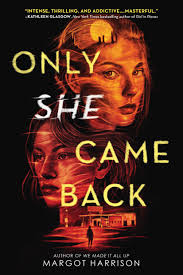
Only She Came Back

Novel by Margot Harrison

Recommended Audience*: None.

* Marketed to High School

Opinion: Strongly Do NOT Recommend

Synopsis: Geared towards high school students, this suspenseful novel portrays college-aged characters involved in the sudden disappearance of Callum Massey. While many suspect his girlfriend Kiri Dunsmore is responsible, main character Sam is determined to get to the bottom of the case. Sam becomes romantically interested in her old classmate Kiri, and will go to great lengths to protect her, even if she might be guilty. Nearly every box of “inappropriate content” is checked with this one. As such, this book is strongly NOT recommended.

Advisories: R-Rated language throughout, LGBTQ+ characters and romantic/sexual encounters, alcohol and drug use, glorification of casual sex, the list goes on…

Details:

This book caught my eye as it was a 2025 TAYSHA Reading List nominee on the shelf at my local library. As a lover of suspense and true-crime, I decided to give this book a read. Typically, I’m already on high alert when I see a book that is written for high school students but portrays college-aged students. This typically means that we’re exposing underage readers to adult situations and behaviors, and that rang true in this book as well.

If this book was marketed towards adults, this would be a different review. However, simply as a parent, forget as a Muslim parent, as I read I kept screaming internally, “WHY WOULD YOU MARKET THIS TO MINORS??!! WHO WOULD WANT THEIR TEEN READING THIS??” One would hope that the normalization of underage drinking, illegal marijuana use, and casual sex would make most parents want their teenagers to steer clear of this book and personally I can’t help but question the ethics of publishers that are pushing such agendas on our youth.

Furthermore, so much of this book is antithetical to Islamic values that I really pray that it doesn’t fall into the hands of our readers. There are so many aspects of this book that makes it unsuitable, not the least of which is that the main character Sam develops romantic feelings for her old classmate Kiri Dunsmore which culminates in a lesbian kissing scene.

In terms of any “value” in this book, I would say that I appreciated the cautionary tale that was the toxic relationship portrayed between Callum and Kiri. True-crime fans will likely draw parallels as I did to the real-life Gabby Petito case. Aside from that, there’s no great takeaways and the entertainment value wasn’t that high for me besides, at best a 3/5.

Things I Liked:

  • true-crime element
  • cautionary tale of toxic romantic relationships

Detailed Advisories:

  • R-Rated language throughout (f***, b****, sh**, etc.)
  • references to suicide, overdoses
  • LGBTQ+ characters and romantic themes throughout, including a lesbian kissing scene
  • reflections on heterosexual and LGBTQ+ past sexual encounters
  • description of a “threesome” sexual encounter that nearly occurred
  • normalization of alcohol and drug (marijuana) use
  • normalization of casual non-committal relationships and sex
  • portrayals of toxic and emotionally abusive romantic relationships

Need I go on….?! I think I’ll stop here but the list could keep going…

Advisories Note: This list of advisories is not exhaustive and does not capture every instance of questionable content, but rather is intended to give an overall sense of the content of the book.

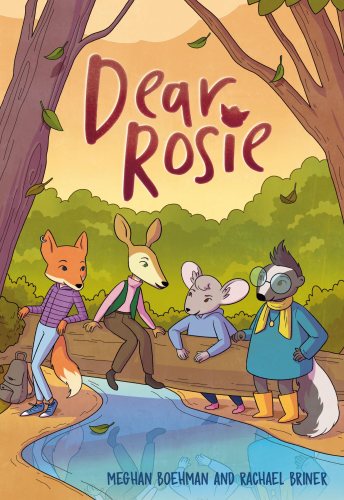
Dear Rosie (Graphic Novel)

Recommended Audience*: None.

Opinion: Do not recommend.

Synopsis: The concept behind this graphic novel–learning to cope with the grief of a close friend passing away–had so much potential but ultimately did not deliver. The story line was weak and had just enough questionable content to push it from the “neutral” to the “do not recommend” category.

Advisories: mild crude language, engaging in dangerous/illegal behavior, reference to online boyfriend, etc.

Details:

While I was perusing books at the library, this one caught my eye; I was excited to see a book about coping with grief after losing a friend. The concept had so much potential. Unfortunately the book fell flat. Main character Millie desperately misses her late friend Rosie. When she finds a notebook that has a symbol she associates with Rosie, Millie tries to find out how the notebook is connected to her friend.

During this anticlimactic quest, Millie and her friends end up trespassing and vandalizing property (adding graffiti to an abandoned property). Later in the book, when Millie’s friend is feeling overwhelmed with grief, she attempts to runaway but chickens out. Honestly, the behaviors depicted were in my opinion dangerous, and I would not want my Middle Schooler to engage in anything similar. While I appreciated that this may truly depict how some tweens and teenagers cope with loss, I didn’t feel like it’s something readers would really benefit from, nor would I want them to emulate these behaviors.

Ultimately, there were very few takeaways that I felt would be beneficial for readers and too many negative behaviors portrayed. I didn’t feel like the storyline was particularly engaging or compelling either. While there’s not a ton of questionable content, the book just didn’t offer much and I wouldn’t recommend it.

Things I Liked:

  • portrayal of friendship
  • depiction of main character working in family business

Detailed Advisories:

  • toilet humor: farting (p. 5)
  • mild crude language: stupid, jerk (p. 36, 103, 179)
  • name-calling: loser (p.45)
  • belittling someone for their old/damaged phone (p. 51)
  • disrespect to authority figure (teacher) (p.101)
  • reference to online boyfriend (p. 113-5)
  • trespassing (p. 124, 152-4)
  • running away (p. 168)
  • vandalism (p. 183-4)

Advisories Note: This list of advisories is not exhaustive and may not capture every instance of questionable content, but rather is intended to give an overall sense of the content of the book.

*Note: While we do not recommend this book to anyone, the intended audience indicated by the author/publisher is Middle Grades.

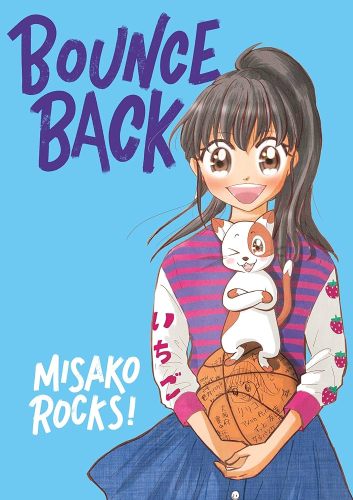
Bounce Back (Graphic Novel)

Recommended Audience: None.

Opinion: Do not recommend.

Synopsis: This graphic novel did not offer much in way of neither entertainment nor moral value. While the book does not contain egregiously questionable content, nor is it plentiful, the fact that the story itself was hardly engaging and the moral takeaways were minimal made this book a ‘pass’ for me.

Advisories: bullying/teasing, mild crude language, dating, kissing, and more

Note: I write this review with the caveat that I am far from a connoisseur when it comes to manga. I don’t read much of it, and I don’t particularly seek it out. A manga fan might have an entirely different opinion on this book.

Details:

This manga-style graphic novel has readers following along as Lilico, a middle school girl from Osaka who loves basketball, migrates from Japan to the United States. Lilico struggles to adjust to her new home and has to deal with harsh bullies as she tries to find her way. Lilico’s talent in basketball paves a path for her to gain popularity, but at what cost? Lilico must remind herself what it means to be a good friend and find ways to build bridges between peer groups.

This book fell flat for me. I found the melodrama of the book to be off-putting, but I recognize this can be a trait of manga. I felt that Lilico’s strategies to gain friends and repair relationships were weak at best and not strategies I would want my own children to employ. In order to win over her bully, Lilico basically proves herself on the basketball court and becomes a major asset to the girls basketball team. In order to build bridges between two rivals, she encourages Nala to design and create a team mascot costume for the school. I don’t like that in both scenarios, the characters had to offer some type of service/skill in order to curry favor with those who were treating them badly.

Sometimes if the moral takeaways and overall value of the book in one fashion or another is compelling enough, I can forgive some indiscretions in terms of questionable content. Ultimately, this book did not meet that threshold for me therefore I do not recommend it.

Things I Liked:

  • Lilico learned to stand up for herself against bullies but not in a particularly compelling way — she basically proved her value to them via her basketball talent
  • Lilico mended her friendship with Nala
  • Learning about Japanese culture (food, school experiences, clothing, beliefs, etc.)

Advisory Details:

  • references to being someone else in a “past life” (p. 15)
  • bullying, teasing (recurring)
  • mild crude language — shut up, crap
  • “guardian spirit” character that possesses a cat and assists Lilico (introduced on p. 50 and recurring thereafter)
  • boy and girls hanging out unsupervised in a character’s bedroom (p. 58)
  • eating pork (p. 85)
  • reference to a specific food believed to bring good luck (p.86)
  • boy and girls sleeping over together (p. 88)
  • reference to getting a boyfriend, crushes (p. 94, 139)
  • fan-girling over bands (p. 139)
  • dating (p. 176-7, 190-2)
  • boy-girl hugging (p. 218)
  • boy-girl kissing (p. 255)

Note: This list of advisories is not exhaustive and may not capture every instance of questionable content, but rather is intended to give an overall sense of the content of the book.

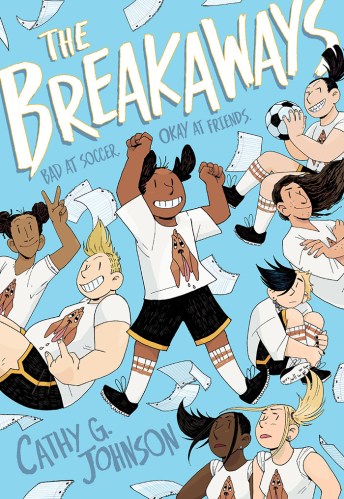
The Breakaways (Graphic Novel)

Recommended Audience: NONE

Opinion: NOT recommended.

Advisories: bullying, harassment, LGBT+ characters, LGBT+ romance, transgenderism

Details:

If you are someone who prioritizes mainstream Islamic values (which you likely are, since you’re on this website), this is not the book for you or your children. The overall plot offers nothing positive whatsoever. There is constant bullying and harassment between all the characters. They are all on a soccer team that they couldn’t care less about and ultimately decide that the best thing to do would be to completely abandon the team altogether mid-game. Not exactly the values I’m looking to instill in my kids.

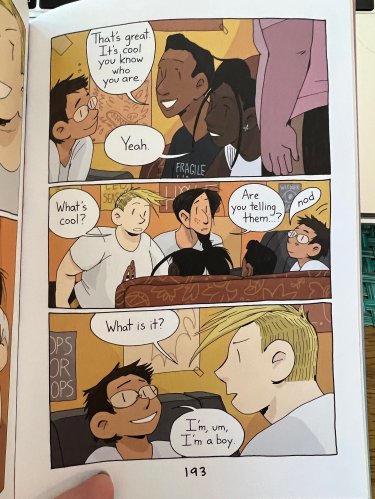
Furthermore, there are very pro-LGBT+ messages conveyed in the book. A character comes out as trans (female to male) which the other characters affirm and support, and then said character proceeds to kiss another girl. Yet another character comes out as a lesbian and the other character is happy for her.

I was further shocked to learn the target audience for this book is middle grades (ages 8 – 11)! These seemed like really adult themes for young children! The only thing I liked about this book is the hijabi soccer player in the illustrations.

NOTE: As an observant Muslim book reviewer, it is important to me to uphold our Islamic values as it relates to many issues, including LGBT+ topics. However, these values are not to be misconstrued as hatred or condoning of disrespect, harassment, or violence to individuals associated with this demographic.

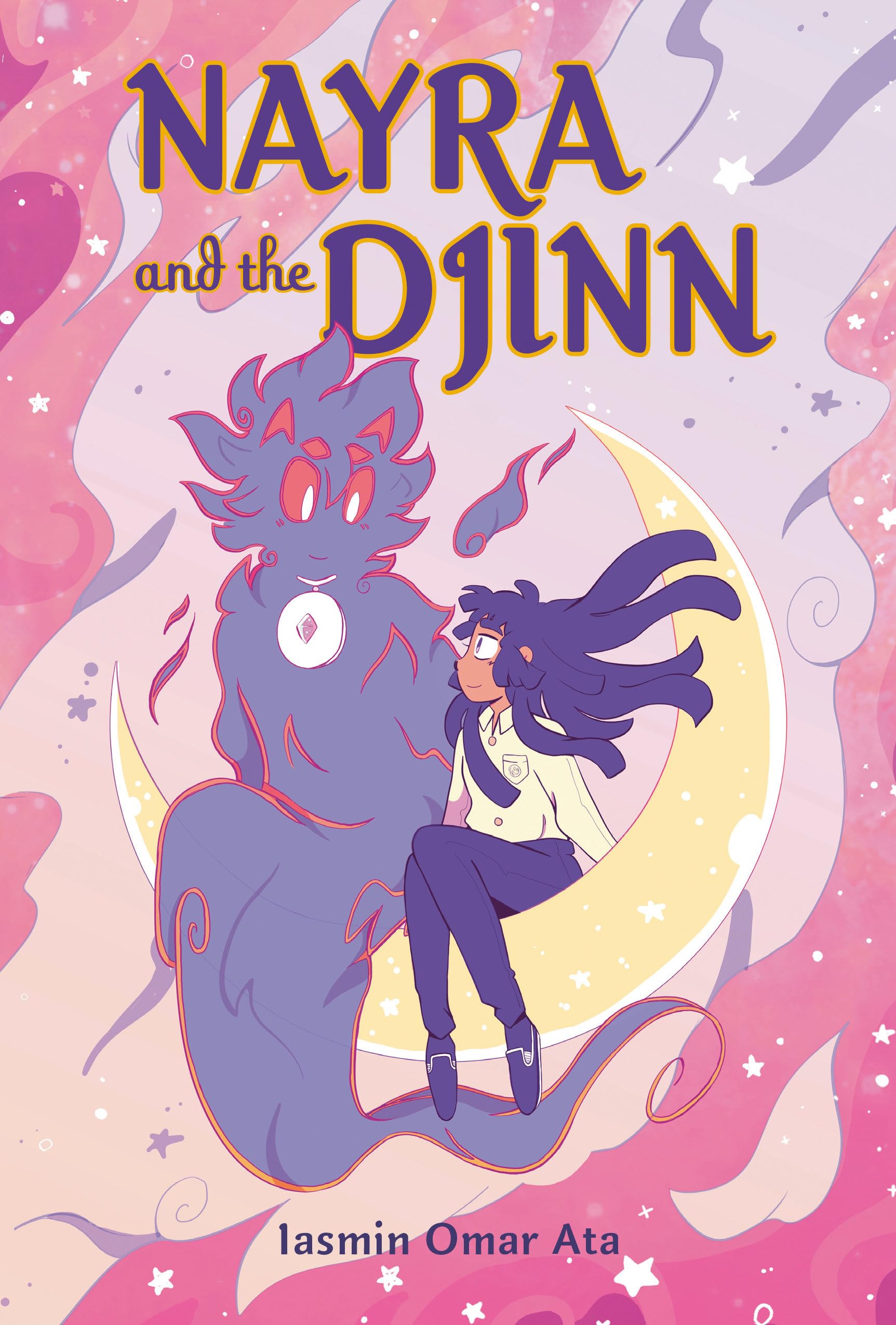
Nayra and the Djinn (Graphic Novel)

Recommended Audience: None.

Opinion: DO NOT RECOMMEND.

The conflation of what is theologically sound info about jinn and what is the author’s fantasy writing can cause confusion for young Muslim readers, even teens. Overall plot isn’t great anyways.

Details:

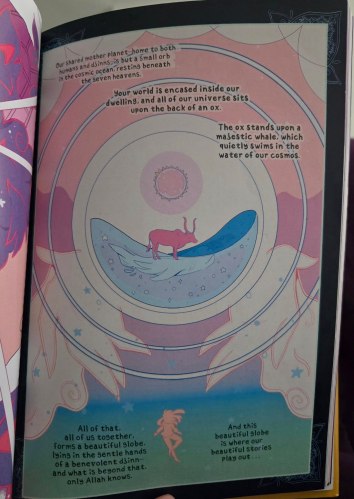
While I loved that the Muslim characters of this book are shown observing religious practices such as fasting and prayer, I feel that the liberties taken regarding jinn mixed with accurate info about jinn could be confusing for our Muslim readers. As an adult, albeit not extremely well versed in matters of the Jinn, there were times that I had to do some research to see if what was being portrayed in the book is actually a part of our faith or not; I would hate for a young Muslim reader to have to navigate that same space. For example, there is a section that talks about the nature of the universe and it being placed on the back of a whale. (See picture.) That struck me as odd and when I did research on it, it’s based on a fabricated hadith. See Sapience Institute’s video regarding this fabricated hadith here if you’re interested.

Furthermore, the storyline is honestly not that great. The main character Nayra has an extremely clingy friend named Rami who is upset with her for not spending enough time together. Nayra is constantly called ‘baba ganoush’ by a bully and wants to switch schools. There’s not a lot of depth to the overall plot and readers won’t take away much in regards to lessons learned after reading this book.

Lastly, some families may also take issue with the fact that the author Iasmin Omar Ata identifies as non-binary. In the book it is stated that jinn do not have gender and the main jinn character also is non-binary and uses they/them pronouns. I personally focus more on the content of books, rather than the author’s identity but I can appreciate how others would consider this when selecting books.

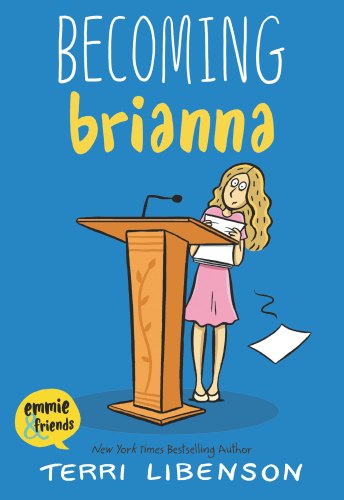
Becoming Brianna (Graphic Novel)

Recommended Audience: None.

Opinion: Pass. Not recommended.

While this book provides an opportunity to learn about Jewish culture, specifically bat mitzahs, Bri’s disinterest in her faith and other advisories make this book a no-go for me.

Details:

This is another book I had a hard time with. On the one hand, I believe that it’s really important for our readers to learn about other faiths and cultures, and their respective traditions. And for that reason, I liked this book. This story is about title character Brianna preparing for her bat mitzvah, a Jewish rite of passage. As she prepares, she questions her reasons behind agreeing to the bat mitzvah in the first place and if this tradition, and furthermore faith, is something she really believes in.

As a parent of faith whose roots are intertwined with Judaism and Christianity, Brianna’s resistance to learn and observe her faith is a bit off-putting. I wouldn’t want my own children to behave in such as way when it comes to Islam. When Brianna narrates how she “put her foot down” and refused to attend religious school in fifth grade because she had “more important things to do,” it bothered me, because again, this is not something I would want my own child to emulate in regards to their own faith.

On the flip side, as a Muslim parent, I don’t feel AS challenged by Brianna’s questioning of Judaism and Jewish rites. Brianna’s unwillingness to “blindly follow” is not threatening to me. It does get a bit complicated however because some of her sacrilegious thoughts regarding Judaism, carry over into Islam as we share many prophets (peace be upon them all) and narratives.

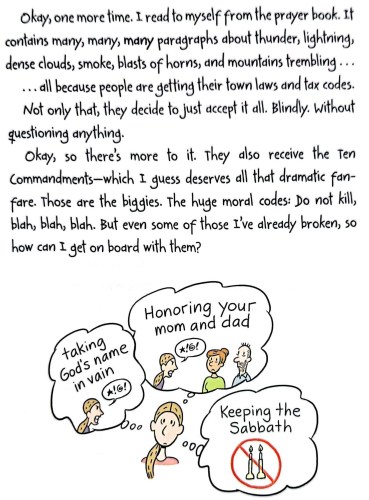
As an example, when describing her Jewish prayer book, she says “It contains many, many, many paragraphs about thunder, lightning, dense clouds, smoke, blasts of horns, and mountains trembling… all because people are getting their town laws and tax codes. Not only that, they decide to just accept it all. Blindly. Without questioning anything.” (p.161) The sarcastic tone used when referring to God’s commandments to the Jewish people didn’t sit well with me.

Ultimately, I have to ask myself if the value the book brings to the table is worth dealing with the issues it contains. In this case, I leaned with “no.” In addition to the concerns above, other advisories (outlined below) pushed this book just over the edge for me. I think there are other ways for our children to learn about other faiths and cultures in a respectful, engaging way. This book doesn’t have to be part of that journey. This book is far from the worst when it comes to questionable content, but if I’m in the position to say which books I would put in front of our Muslim kids, this is one that I wouldn’t recommend.

Things I Liked:

  • Brianna is a child of divorcees, bouncing between her two parents’ households. I appreciated that readers who might be living in similar situations will be able to relate
  • learning about the traditions and vocabularies of a bat mitzvah; it was insightful to see all that goes into the planning of the event and Bri’s mom’s antics were humorous
  • overall there wasn’t a heavy emphasis on topics that I would consider inappropriate
  • Bri’s rabbi seems friendly and approachable; I liked this because sometimes religious characters can be portrayed otherwise, simply because they are religious

Advisories:

  • an infographic seems to depict a variety of “non-traditional” families, including gay and lesbian couples (p. 18)
  • Brianna narrates that in fifth grade, she “put her foot down” and refused to go to religious school because she had “more important things to do” and “wasn’t that into it” — I’m concerned this is sending the wrong message to our readers (p. 20)
  • talks about liking boys (p. 35, 37, p. 82)
  • Brianna questions her beliefs in Judaism and its rituals (p. 71)
  • Brianna’s aunt talks about being an atheist (p. 115)
  • Bri’s father reflects on when he asked a girl out on a date (p. 127-129)
  • depiction of physical contact (hugs) between girls and guys (p. 138)
  • sacrilegious talks about God’s interactions and commandments with the Jews (p. 161)
  • party of middle school boys and girls dancing together depicted (p. 301-309)

Remarkably Ruby (Graphic Novel)

Recommended Audience: None.

Opinion: Wishing I Could Recommend, But I CAN’T (See Below.)

– There are so many positive messages here about coping with anxiety, repairing friendships, finding where you belong, etc.

– Advisories for recurring scenes of dating and a couple of LGBT+ inferences, among other more minor issues

Details:

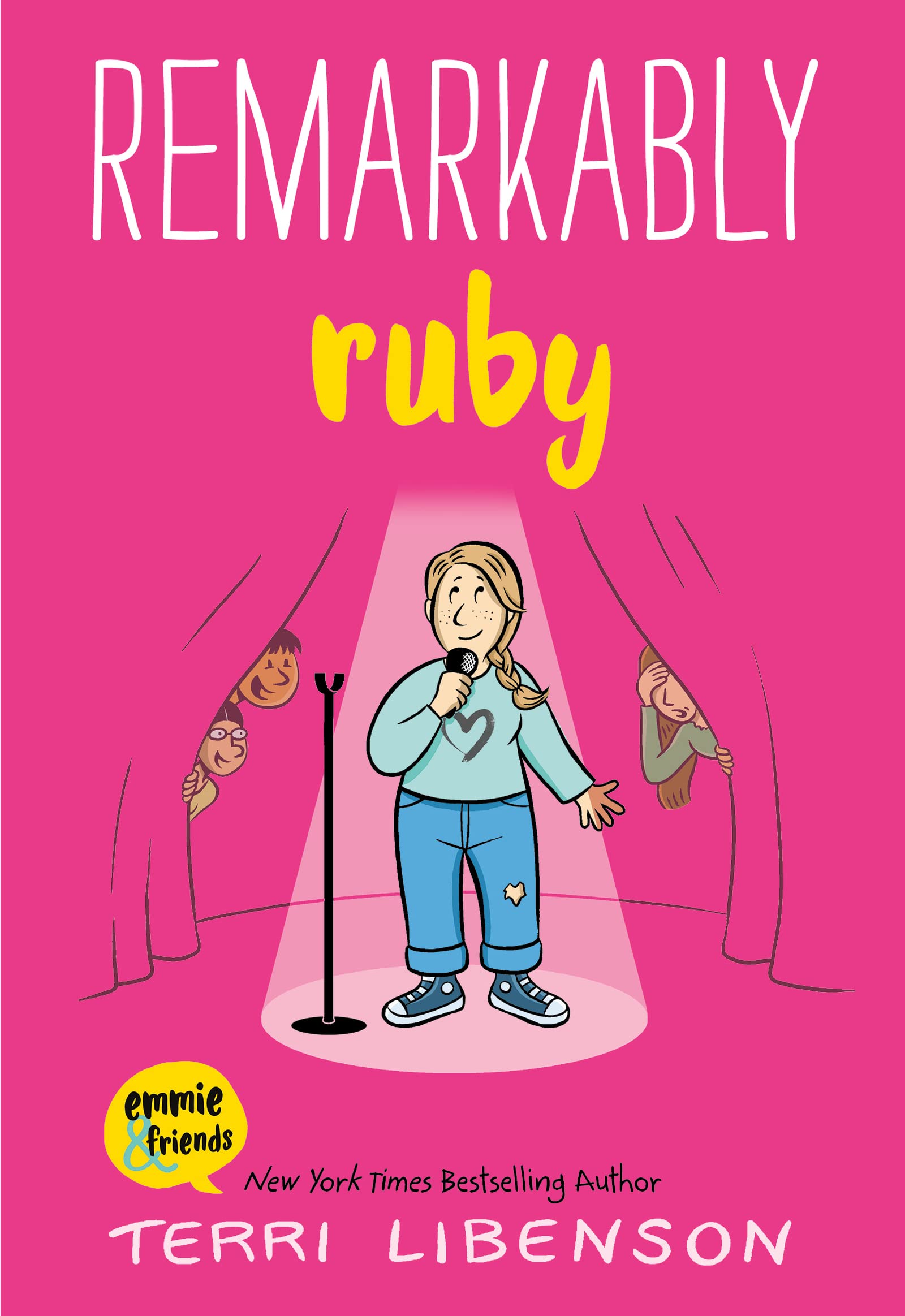
I really sat with this book for awhile agonizing over whether or not to put it on my list of “approved” books and ultimately, I had to say no, especially given that the target audience is middle school. The story is a dual perspective between two former friends Mia and Ruby who have grown apart over the years. Ruby feels socially awkward and struggles to fit in with her peers. Mia desperately wants to become class president, inasmuch so that she loses sight of what’s important: her relationships with the people she cares for. Mia and Ruby’s animosity hits a fever pitch culminating in a shoving match at school. Afterwards, they are forced to work together as a punishment and it’s there that they are able to begin to repair their friendship and move in a positive direction.

Look, this book has a lot of positive messages. I feel like middle school readers, especially girls, would relate a lot with the drama and the struggles of either Ruby or Mia, or perhaps a bit of both, as they navigate middle school friendships. I loved how Ruby was able to find her confidence through a newly-formed Poetry Club and that the author was able to work in poetry as a form of self-expression, art, and belonging. I appreciated how Mia was able to reflect on her past behavior and work to repair relationships that she had hurt. The close connections both girls had with their parents, including Ruby’s overly-eager and quirky mom (who amused me quite a bit!) was endearing. I really liked how the illustrator used a unique artistic style when depicting Mia’s narratives versus Ruby’s narratives. The story has quite a few elements of humor too, so I found myself chuckling along as I read.

While there is a lot to be gained here, unfortunately this book contains a few too many elements of questionable content, particularly frequent references to a boyfriend and a couple of LGBT+ inferences, therefore I can’t in good conscience recommend this book. Some families may be okay with allowing their middle schooler to read this book coupled with a guided discussion (which I personally would respect), but as a stand alone without guidance, I can’t recommend it. High school readers may be okay to read this as they have likely already come across these issues before.

Additional Advisories:

  • one mention of a money tree that is supposed to bring “good fortune” (I didn’t think this was meant literally) (p. 6)
  • recurring discussion about Mia’s boyfriend Trevor, including when they first kissed (and that they’ve improved since then) (p. 32-35 and several more)
  • one character, Juan, writes a song that is meant as a simile for his affection for another male peer (p. 227-228), later (p. 242-243) Ruby asks Juan more about this and they have another brief conversation about his male love interest
  • middle school characters being dishonest with parents about where they claimed to be (p. 232)
  • mild language (e.g. stupid, jerk)
  • Ruby’s dad (cartoon) is portrayed in his underwear from the back (p. 204)
  • another mention of kissing someone in the fourth grade (p. 258)