Only She Came Back

Novel by Margot Harrison

Recommended Audience*: None.

* Marketed to High School

Opinion: Strongly Do NOT Recommend

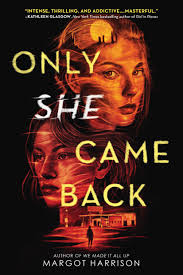
Synopsis: Geared towards high school students, this suspenseful novel portrays college-aged characters involved in the sudden disappearance of Callum Massey. While many suspect his girlfriend Kiri Dunsmore is responsible, main character Sam is determined to get to the bottom of the case. Sam becomes romantically interested in her old classmate Kiri, and will go to great lengths to protect her, even if she might be guilty. Nearly every box of “inappropriate content” is checked with this one. As such, this book is strongly NOT recommended.

Advisories: R-Rated language throughout, LGBTQ+ characters and romantic/sexual encounters, alcohol and drug use, glorification of casual sex, the list goes on…

Details:

This book caught my eye as it was a 2025 TAYSHA Reading List nominee on the shelf at my local library. As a lover of suspense and true-crime, I decided to give this book a read. Typically, I’m already on high alert when I see a book that is written for high school students but portrays college-aged students. This typically means that we’re exposing underage readers to adult situations and behaviors, and that rang true in this book as well.

If this book was marketed towards adults, this would be a different review. However, simply as a parent, forget as a Muslim parent, as I read I kept screaming internally, “WHY WOULD YOU MARKET THIS TO MINORS??!! WHO WOULD WANT THEIR TEEN READING THIS??” One would hope that the normalization of underage drinking, illegal marijuana use, and casual sex would make most parents want their teenagers to steer clear of this book and personally I can’t help but question the ethics of publishers that are pushing such agendas on our youth.

Furthermore, so much of this book is antithetical to Islamic values that I really pray that it doesn’t fall into the hands of our readers. There are so many aspects of this book that makes it unsuitable, not the least of which is that the main character Sam develops romantic feelings for her old classmate Kiri Dunsmore which culminates in a lesbian kissing scene.

In terms of any “value” in this book, I would say that I appreciated the cautionary tale that was the toxic relationship portrayed between Callum and Kiri. True-crime fans will likely draw parallels as I did to the real-life Gabby Petito case. Aside from that, there’s no great takeaways and the entertainment value wasn’t that high for me besides, at best a 3/5.

Things I Liked:

  • true-crime element
  • cautionary tale of toxic romantic relationships

Detailed Advisories:

  • R-Rated language throughout (f***, b****, sh**, etc.)
  • references to suicide, overdoses
  • LGBTQ+ characters and romantic themes throughout, including a lesbian kissing scene
  • reflections on heterosexual and LGBTQ+ past sexual encounters
  • description of a “threesome” sexual encounter that nearly occurred
  • normalization of alcohol and drug (marijuana) use
  • normalization of casual non-committal relationships and sex
  • portrayals of toxic and emotionally abusive romantic relationships

Need I go on….?! I think I’ll stop here but the list could keep going…

Advisories Note: This list of advisories is not exhaustive and does not capture every instance of questionable content, but rather is intended to give an overall sense of the content of the book.

Nayra and the Djinn (Graphic Novel)

Recommended Audience: None.

Opinion: DO NOT RECOMMEND.

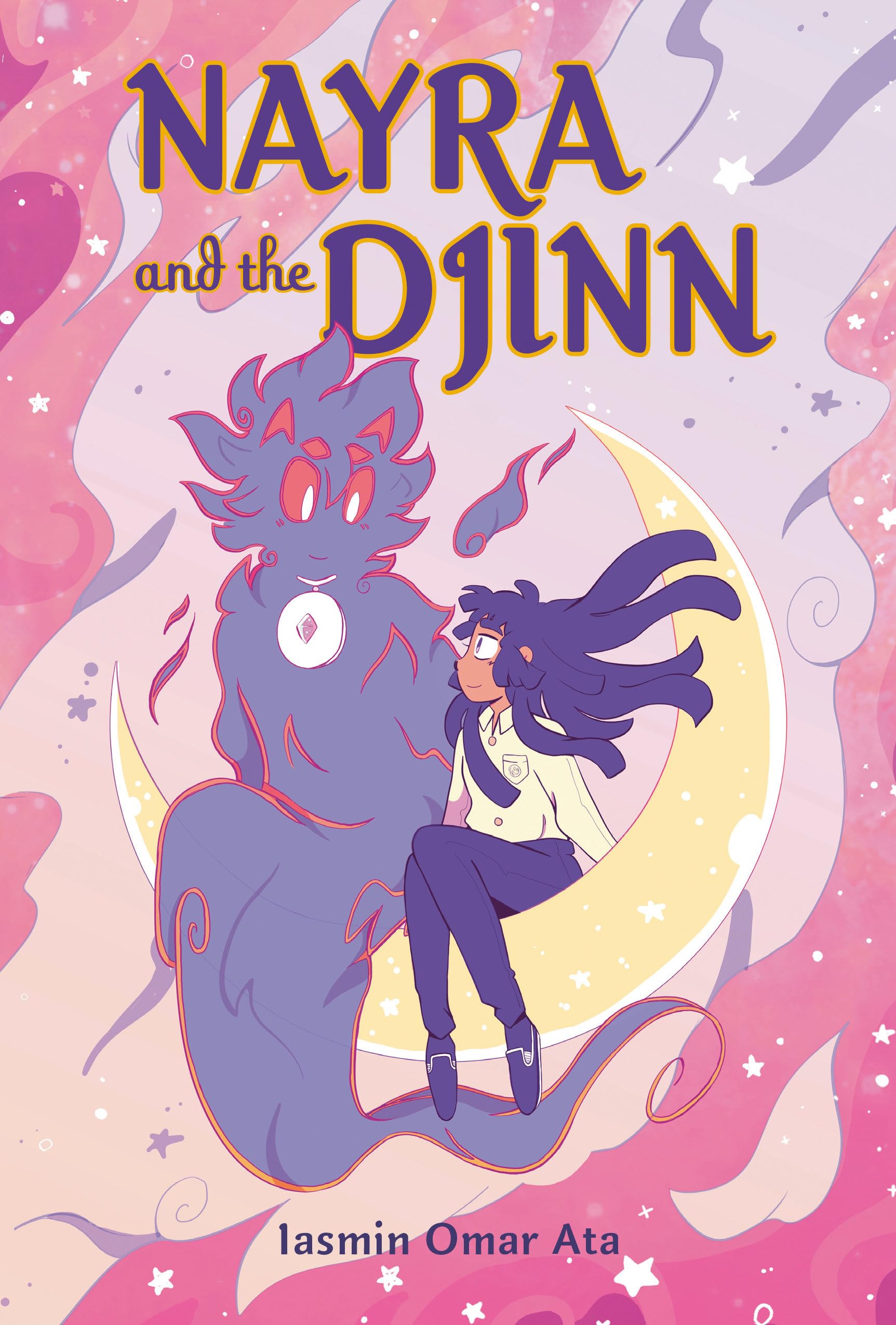
The conflation of what is theologically sound info about jinn and what is the author’s fantasy writing can cause confusion for young Muslim readers, even teens. Overall plot isn’t great anyways.

Details:

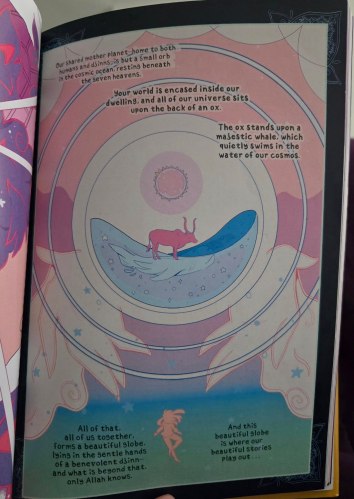
While I loved that the Muslim characters of this book are shown observing religious practices such as fasting and prayer, I feel that the liberties taken regarding jinn mixed with accurate info about jinn could be confusing for our Muslim readers. As an adult, albeit not extremely well versed in matters of the Jinn, there were times that I had to do some research to see if what was being portrayed in the book is actually a part of our faith or not; I would hate for a young Muslim reader to have to navigate that same space. For example, there is a section that talks about the nature of the universe and it being placed on the back of a whale. (See picture.) That struck me as odd and when I did research on it, it’s based on a fabricated hadith. See Sapience Institute’s video regarding this fabricated hadith here if you’re interested.

Furthermore, the storyline is honestly not that great. The main character Nayra has an extremely clingy friend named Rami who is upset with her for not spending enough time together. Nayra is constantly called ‘baba ganoush’ by a bully and wants to switch schools. There’s not a lot of depth to the overall plot and readers won’t take away much in regards to lessons learned after reading this book.

Lastly, some families may also take issue with the fact that the author Iasmin Omar Ata identifies as non-binary. In the book it is stated that jinn do not have gender and the main jinn character also is non-binary and uses they/them pronouns. I personally focus more on the content of books, rather than the author’s identity but I can appreciate how others would consider this when selecting books.

Be Prepared (Graphic Novel)

Recommended Audience: Ages 14+

Opinion: Neutral with Advisories

Potential Benefits of Reading This: develop a sense of empathy, learn about a different culture (Russian Orthodox) and experiences (sleep away camp)

Advisories: bullying, trauma, hazing, crude language

Details: I feel that it is very important for readers to read about different cultures and backgrounds. It helps develop empathy, a broader worldview, and makes us better people in my humble opinion. For this reason, I took the dive and read Be Prepared by Russian American author Vera Brosgol. The story is based on an amalgamation of the author and her friend’s real experiences attending Russian youth camps in upstate New York. I feel that the biggest takeaway from reading this book is hopefully readers will develop a strong sense of empathy and pity for Vera and all that she experienced. The book is sad and Vera’s memories are frankly somewhat traumatic.

At camp, Vera experiences many struggles trying to fit in with the older girls at camp and witnesses many instances of bullying. As a reader, you can’t help but have your heart go out to her for all the awful things she is experiencing or witnessing. The book does not end with some great moral lesson or turn of events, in fact Vera doesn’t think she ever wants to go to camp again. In some ways, I appreciated that for what it was. At the end of the book, the author has a note for the readers explaining that she did not have positive experiences at camp and she really did struggle to make friends. I really appreciated her sharing that perspective because life really isn’t rosy all the time and that’s something to reflect upon.

That being said, there are definitely some factors that parents should consider when deciding whether or not they would want their child to read this. First of all, the experience of going to sleep away camp for weeks at a time may be something that Muslim parents don’t even want their children to read about as it is not something that they would want their children to experience for themselves. However, overall the experiences the author describes are not particularly pleasant so it might actually work in parents’ favor. There are several incidences of bullying, borderline hazing, that are described in the book, including a time where one of the character’s period-stained underwear are put on display on the flag post to humiliate her. Lastly, there are some depictions and promotion of Russian Orthodox religious beliefs and practices that some parents may not be comfortable with their child reading. I would definitely not recommend this book for elementary children at all. Perhaps a mature Middle School student may be able to read this with parental guidance.

In conclusion, would I let a high school student read this? Yes, I would, because I feel like there are some benefits there and hopefully a good discussion to follow. Would I necessarily recommend this book to others or put it in an Islamic school library? No, I would not.