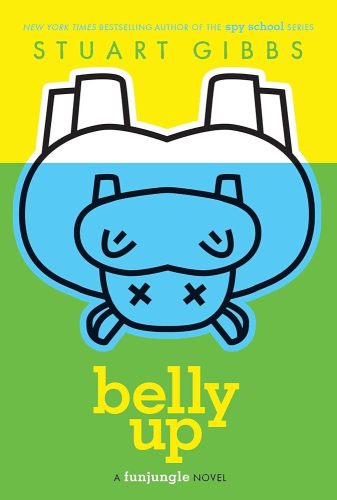
Belly Up

Book #1 of the FunJungle Series by Stuart Gibbs

Recommended Audience: 5th Grade +

Opinion: Neutral w/ Advisories

While this action-packed mystery novel has some benefits such as teaching readers about animals and conservation, opportunities to think critically, and developing courage and resilience, it does contain some moderate foul language and other questionable content that may make this a “pass” for some families. There is definitely entertainment value here, but if you’re looking for a squeaky clean book that will greatly develop the moral character of your reader, this isn’t it.

Advisories: moderate foul language (a**, da**, cr**, pi**ed off, etc.), lying, doing unethical/illegal things to serve a “greater good” (with consequences), an underwear-clad swimming scene, boy-girl friendships, mild gore/gross-out scenes, etc. (See below for details.)

Details:

Stuart Gibbs is a prolific writer with several series supposedly geared towards middle grades. I personally feel that his writing is generally better suited for fifth grade and up. One reason is that unfortunately Gibbs often uses some moderate crude language throughout his writing, which is a shame because I really don’t feel that it’s necessary. It doesn’t add value to the book and makes the books less appropriate for our readers. I’ve read that he cleans up the language a bit in the subsequent books of this series, but I can’t personally attest to that at this point.

Belly Up is the first book in the FunJungle series of books. It is the tale of twelve-year-old Teddy Fitzroy who lives just outside a large zoo / amusement park. When the beloved park mascot, Henry Hippo, abruptly dies, Teddy suspects there’s more to the story. His sleuthing takes him on a suspenseful adventure filled with a whodunit mystery, harrowing close-calls, and more.

The entertainment value of this book is high; my middle schooler can’t get enough. For my taste, the questionable content is just barely palatable. Do I wish the author didn’t include the swear words and the underwear swimming scene? ABSOLUTELY. Would I ban my middle schooler from reading this book because of these things? No. Therefore, I gave this a “neutral w/ advisories” rating. I might have to use some white-out before sticking this one on the shelf.

Things I Liked:

  • animal facts and information about conservation efforts throughout
  • occasional utilization of higher level vocabulary (e.g. deign, groused, rube, segued, glibness, dirge, officious)
  • Teddy is determined to get to the truth and hold those responsible to account — admirable traits
  • suspenseful mystery keeps readers guessing until the end; great for critical thinking
  • humorous and entertaining; held my picky middle school reader’s attention
  • unethical actions have consequences
  • a close and loving relationship is portrayed between Teddy and his parents

Advisory Details:

  • moderate crude language (screwed, pissed off, bastard, idiot, jerk, crap, damn, ass)
  • practical jokes reference (p. 7)
  • fat-shaming/disrespect to an adult/authority figure (p.17)
  • sneaking around/ disobeying authority (p. 38, p. 145)
  • reference to possible suicide (of an animal) (p. 43)
  • a scene where Teddy and Summer go swimming in their underwear (p.95)
  • lying (a few separate incidences to avoid getting in trouble) (p. 103, 106)
  • glorification/justification of lying as a means towards an end (p. 107)
  • mild crush inferences (p. 115, p. 294)
  • reference to evolution, specifically reptiles being the ancestors of birds (p. 117)
  • reference to herpes without any further details, not specific to a type of herpes (p. 133)
  • reference to someone who ‘reeked of marijuana’ (p. 155)
  • describes autopsy of a dead hippo
  • gory scene where hippo guts get all over the audience (p. 251)

Note: This list is not exhaustive and may not capture every instance of questionable content, but rather is intended to give an overall sense of the content of the book.
Awkward (Graphic Novel)

Recommended Audience: Middle School +

Opinion: Recommended

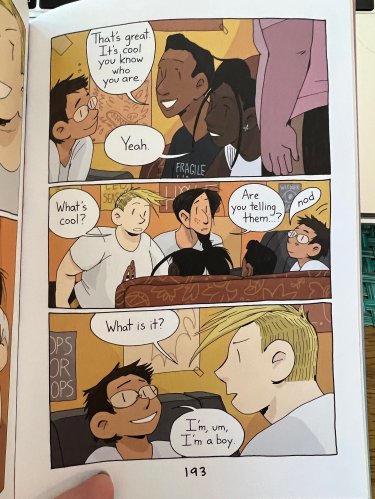
Rival school clubs learn to work together after weeks of contention. Readers get to experience doing the right thing when faced with a moral dilemma, putting aside differences to work together, standing up to bullies, and more.

Advisories for mild crude language (e.g. pissed, jerk, idiot), mean-spirited jeering and name-calling (e.g. losers, dork), one reference to the ‘B-word’

Details:

At first glance of the cover, I automatically assumed that this book would have an overarching romance theme. Surprisingly, it doesn’t at all. The story revolves around two students, Penelope and Jaime, and their respective rival art and science clubs. Complete with middle school angst and melodrama, this book is quite humorous and overall wholesome. Aside from the name-calling and pranks, there’s really little to point out in terms of morally questionable content. However, if you wish to avoid stories that have a boy-girl friendship, this will be a book you would want to skip.

I think that middle school readers and up (perhaps even a mature 5th grader) will really enjoy this book. I love that the author relayed the message that art and science don’t have to be exclusive, and that in fact many famous people have been adept at both (p.188-190). Of course, I wish that the author had expanded the examples she gave beyond the Renaissance and Leonardo Da Vinci, but we’re not there yet. The scene where students stood up to the class bullies was a delight (p.208).

Things I Liked:

  • diversity of characters — the brilliant science teacher is a fierce woman of color, Jaime’s mom is in an electric wheelchair, and the newspaper staff reporter is a hijabi
  • resolution of conflict – ultimately the rival science and art clubs work together to achieve something great
  • doing the right thing – when faced with a moral dilemma, main character Penelope makes the right choice
  • consequences for the constant bickering and fighting between the two clubs
  • comedic elements – there were many comedic elements that didn’t come at the expense of character’s feelings

Advisories:

  • a vague inference to mammals having breasts (p.41) — I honestly think this would fly over most kids’ heads unless they’re familiar with mammals, and even then, it’s not really that bad
  • name-calling/teasing throughout (e.g. dork, nerd, losers)
  • mild crude language (e.g. pissed [p.93], stupid)
  • a character’s parent referring to the character’s mom as her “lazy BXXXX mother” (p. 104) — this is literally how it is written (with the X’s as it appears). I honestly don’t see why the author felt the need to include this. They could’ve got the same sentiment across without throwing in the expletive, even if it is written in a covert way.

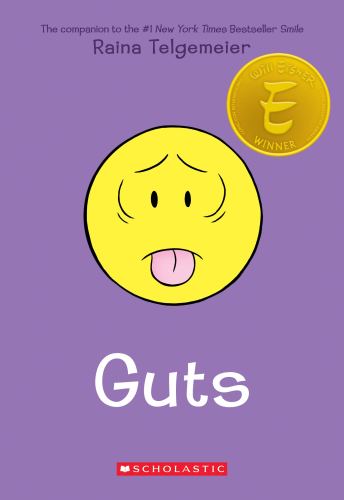
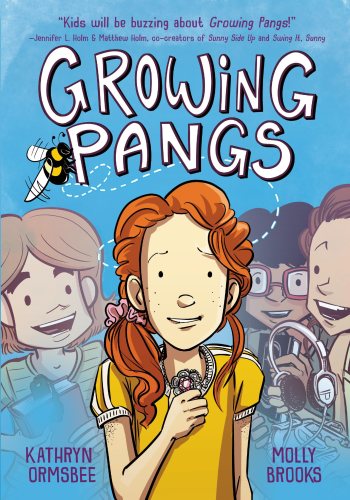
Growing Pangs (Graphic Novel)

Recommended Audience: Middle School and Up

Opinion: Definitely Recommend!

This is a squeaky clean book that portrays the reality of a young girl with obsessive-compulsive disorder. The book offers opportunities for readers to learn about OCD, see how Katie navigates changing friendships, and more!

I was grasping at straws for advisories on this one: a few incidences of mild crude language (e.g. sucks), a few pop culture references, and a mention of girls being too young to drink an alcoholic beverage.

Details:

The first thought I had after reading this graphic novel is “Tell me she has more books like this one!” It was so wholesome, and 99.9% squeaky clean. I came to find that the author does have a few other books, not all will be suitable for our audiences, but that’s a story for another day.

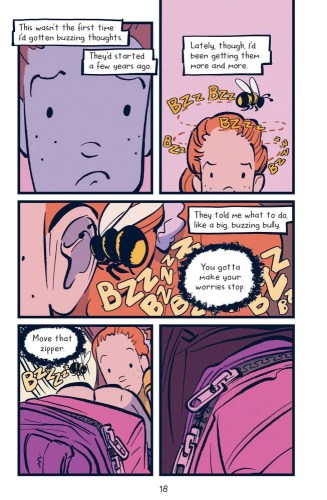
Regarding this book, I definitely recommend it! The plot is based off of the author’s real-life experiences as a homeschooled Middle Schooler living with anxiety and obsessive-compulsive disorder. At first, Katie doesn’t have a diagnosis and doesn’t understand why she feels the need to engage in her compulsions. She refers to her intrusive thoughts as “buzzing” and anthropomorphizes the thoughts as bees swarming around her. It isn’t until the very last bit of the book that the reader learns what these buzzing bees represent. This may be confusing and upsetting for younger readers not familiar with OCD. I would imagine that some young readers might even conjecture that Katie is experiencing whispers from the shayateen. Therefore, I would recommend this book for Middle School or older. If a younger reader wanted to read this book, a guided discussion about OCD would be a sufficient prelude for them to dive in.

As a book reviewer who seeks out books that have very little questionable content that are still relevant and engaging for our youth, I was relieved to find that this book fit the bill. Katie is a wholesome homeschooled girl who attends co-op and church with her family. She loves reading and is excited to be casted into a musical theatre production of Madeline. I can imagine many of the audience reading this may also homeschool, so it is nice to have a book that many of our children will relate to. Katie has to navigate changing friend circles and the jealousies that can come with that. I like how the author relays that many people have their own unique invisible struggles and that Katie is not alone in this way. She has a good relationship with her parents–not one moment of back-talk or disrespect! When Katie finally talks with them about her “buzzing” thoughts, they were supportive and quick to get her the help she needed. While the book ends abruptly with Katie entering a psychologist’s office, the Author’s Note provides clarity and conclusions that the book doesn’t.

Advisories: mile crude language (e.g. suck[s]), occasional pop culture references (Weezer, Harry Potter, *NSync), the girls say they’re “too young” to drink Mint Juleps (alcoholic beverage)