
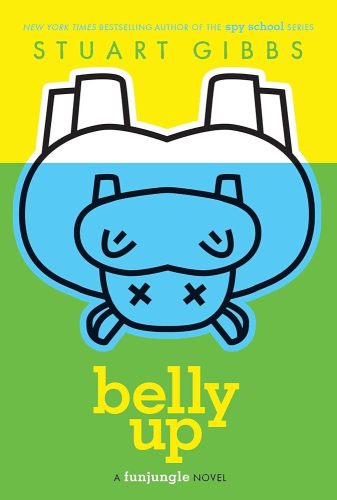
Book #1 of the FunJungle Series by Stuart Gibbs
Recommended Audience: 5th Grade +
Opinion: Neutral w/ Advisories
While this action-packed mystery novel has some benefits such as teaching readers about animals and conservation, opportunities to think critically, and developing courage and resilience, it does contain some moderate foul language and other questionable content that may make this a “pass” for some families. There is definitely entertainment value here, but if you’re looking for a squeaky clean book that will greatly develop the moral character of your reader, this isn’t it.
Advisories: moderate foul language (a**, da**, cr**, pi**ed off, etc.), lying, doing unethical/illegal things to serve a “greater good” (with consequences), an underwear-clad swimming scene, boy-girl friendships, mild gore/gross-out scenes, etc. (See below for details.)
Details:
Stuart Gibbs is a prolific writer with several series supposedly geared towards middle grades. I personally feel that his writing is generally better suited for fifth grade and up. One reason is that unfortunately Gibbs often uses some moderate crude language throughout his writing, which is a shame because I really don’t feel that it’s necessary. It doesn’t add value to the book and makes the books less appropriate for our readers. I’ve read that he cleans up the language a bit in the subsequent books of this series, but I can’t personally attest to that at this point.
Belly Up is the first book in the FunJungle series of books. It is the tale of twelve-year-old Teddy Fitzroy who lives just outside a large zoo / amusement park. When the beloved park mascot, Henry Hippo, abruptly dies, Teddy suspects there’s more to the story. His sleuthing takes him on a suspenseful adventure filled with a whodunit mystery, harrowing close-calls, and more.
The entertainment value of this book is high; my middle schooler can’t get enough. For my taste, the questionable content is just barely palatable. Do I wish the author didn’t include the swear words and the underwear swimming scene? ABSOLUTELY. Would I ban my middle schooler from reading this book because of these things? No. Therefore, I gave this a “neutral w/ advisories” rating. I might have to use some white-out before sticking this one on the shelf.
Things I Liked:
- animal facts and information about conservation efforts throughout
- occasional utilization of higher level vocabulary (e.g. deign, groused, rube, segued, glibness, dirge, officious)
- Teddy is determined to get to the truth and hold those responsible to account — admirable traits
- suspenseful mystery keeps readers guessing until the end; great for critical thinking
- humorous and entertaining; held my picky middle school reader’s attention
- unethical actions have consequences
- a close and loving relationship is portrayed between Teddy and his parents
Advisory Details:
- moderate crude language (screwed, pissed off, bastard, idiot, jerk, crap, damn, ass)
- practical jokes reference (p. 7)
- fat-shaming/disrespect to an adult/authority figure (p.17)
- sneaking around/ disobeying authority (p. 38, p. 145)
- reference to possible suicide (of an animal) (p. 43)
- a scene where Teddy and Summer go swimming in their underwear (p.95)
- lying (a few separate incidences to avoid getting in trouble) (p. 103, 106)
- glorification/justification of lying as a means towards an end (p. 107)
- mild crush inferences (p. 115, p. 294)
- reference to evolution, specifically reptiles being the ancestors of birds (p. 117)
- reference to herpes without any further details, not specific to a type of herpes (p. 133)
- reference to someone who ‘reeked of marijuana’ (p. 155)
- describes autopsy of a dead hippo
- gory scene where hippo guts get all over the audience (p. 251)
Note: This list is not exhaustive and may not capture every instance of questionable content, but rather is intended to give an overall sense of the content of the book.


 Illuminated Pages