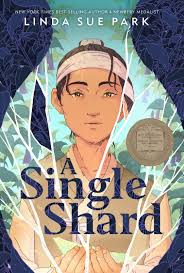
A Single Shard by Linda Sue Park

Recommended Audience: Upper Elementary and Middle School readers/ Children aged 8-14

Opinion– Recommended

Synopsis: Set in 12th century Korea, orphan Tree-ear lives under a bridge in a small village spending his days with a kindly man he calls Craneman. Together, they eke out a meager living foraging and digging through the village’s midden heaps. Despite his love for Craneman, Tree-ear begins looking to the future. He happens upon a famous potter in his village and falls in love with the art of pottery. A Single Shard follows Tree-ear’s journey as he works hard to achieve his dream.

Advisories: mention of the word ‘concubine’ and a group suicide as part of a Korean myth

Details: I came across this title doing research on age-appropriate books to read with my upcoming students. As a historical fiction lover myself, I was intrigued because A Single Shard takes place in a time period I love, but in a place I admittedly know very little about: Korea. After reading the blurb, I added it to my list for review. I recommend this award-winning book on the merit of its writing, character development, and alignment with various Islamic values.

I appreciate Linda Sue Park’s rich writing as well as how she conveyed meaning to me as a reader without dumbing down the language. I could easily imagine myself standing in the forest surrounded by the lush green trees and digging clay on the riverbank next to Tree-ear. Most of all, I appreciate Park’s characterization of Tree-ear, Craneman, and Min the Potter. The descriptions of making and decorating pottery along with day to day life in a medieval Korean village made for an enjoyable read as well.

Character development is another strong aspect to A Single Shard. Readers never find out how old Tree-ear is exactly, but he seems to be between 11-13. He may not be as outrageous or adventurous as some more popular male protagonists, but he possesses grit and resilience. Throughout the story, Tree-ear is faced with moral dilemmas and he frequently falls back on the insight Craneman has given him over the years. More than once, Tree-ear defers to what he thinks Craneman would do as a trusted adult. Tree-ear is also respectful of his elders and never talks back to them. Although Tree-ear’s beliefs do not stem from Islam, they don’t contradict them either. He has a strong sense of right and wrong, respects his elders, refuses to beg for food, and does his best to make sure he does the right thing despite making things harder for himself. Additionally, he keeps his word and works extremely hard not only to work off a debt, but to achieve his dream. Although Craneman was a secondary character, it is plain that his wisdom and careful storytelling impacted Tree-ear in many ways. Additionally, Min undergoes a transformation as he lets go of some serious grief to embrace life.

There are mentions of Buddhism and a Buddhist temple in the story, but there are no explanations or descriptions of practices or rituals. The characters use the temple bells to mark time, but give no indication that they are Buddhists themselves.

Teacher’s Note: This book could lend itself to a plethora of unit studies and interdisciplinary lessons in both a secular or Islamic environment. It could tie into Asian American and Pacific Islander Month or be used to investigate the historical aspects of that time period, specifically for 7th graders. There are also many instances in the story that could spark conversations about right and wrong, societal expectations, grief, friendship, and hard work. Since I focus on novel studies in my class, I plan to read this with my students and study the story structure, vocabulary, and historical period. I look forward to discussing this with my students.

Things I Liked:

  • Craneman and Tree-ear’s genuine concern for one another
  • Tree-ear’s commitment to hard work, a moral code, and his dream
  • View into a different culture
  • The nuances–This book isn’t a difficult read, but it does require a certain level of attention to pick up on the nuances of the story. (Additional teacher’s note: this is a skill many students need to practice.)
  • Tree-ear’s commitment to hard work, a moral code, and his dream

Detailed Advisories:
At one point, Craneman does tell Tree-ear a story of a group of a king’s concubines (pg. 110) that choose to throw themselves off a cliff rather than be captured by the enemy. The story is told as an example of courage, but Craneman does go on to tell Tree-ear that “…leaping into death is not the only way to show true courage” (pg. 111). This may necessitate a conversation about how suicide is haram and not an option for us as Muslims, but I do like that Craneman suggests there are other ways to deal with our problems.

Final Thoughts: It’s a good story with no inappropriate words or actions, many characters have redeemable qualities. Furthermore, it gives opportunities for discussion about how to handle situations.

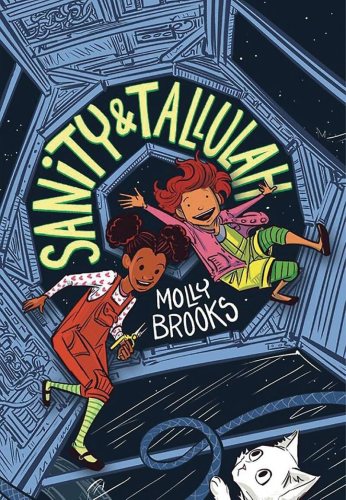
Sanity & Tallulah (Graphic Novel)

Book 1 of the Sanity & Tallulah Series* by Molly Brown

* This review is ONLY for the book described in this post, NOT the series in its entirety.

Recommended Audience: Middle School and Up

Opinion: Recommended w/ Advisories

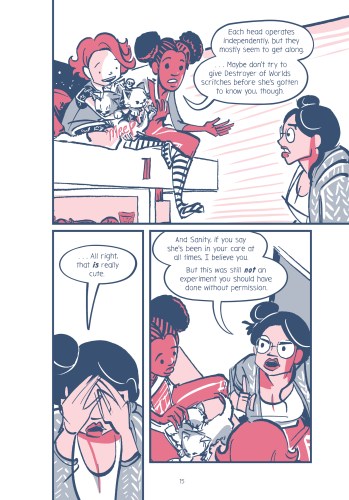
Synopsis: This action-packed graphic novel would be a great find for science fiction lovers ages 10 years+. Readers tag along as best friends Tallulah and Sanity work to figure out who–or what–is wreaking havoc on their beloved space station. Could it be Sanity’s recently-escaped science experiment–a cuddly three-headed kitten–or something else? While there aren’t many overt moral lessons, the story is entertaining and enriching. If your reader enjoyed the cat-chasing antics of novel Grounded by Aisha Saeed, they’ll likely enjoy this book as well.

Advisories: lying, sneaking around, one LGBT+ inference, moderate crude language

Details:

This was a fun, engaging read filled with action and fun sci-fi STEM jargon. Sanity and Tallulah are best friends and partners-in-adventure living on a futuristic space station. When someone, or something, starts causing damage throughout the station, they suspect it might be Sanity’s latest science experiment: a three-headed kitten that has escaped from the lab! The two girls quest to find their fugitive furry friend without getting in to too much trouble along the way.

This was a captivating graphic novel that I would encourage my Middle Schooler to read. Engaging storytelling, strong female leads, STEM representation, and opportunities for critical thinking make this book of value for readers. I would recommend it for even younger grades if it weren’t for the moderate crude language (damn, hell, etc.) and higher-level sci-fi concepts and vocabulary that might leave them a bit lost. The illustrations’ limited color scheme and frequent transitions from dark to light palettes left something to be desired for me, however. If I were to put this on my shelf at home or in an Islamic school library, I’d censor the one LGBT+ inference found on p. 157.

Things I Liked:

  • engaging, fast-paced storytelling
  • diverse cast of characters
  • STEM/sci-fi related themes and vocabulary
  • strong female friendship
  • fun adventure with an element of mystery

Detailed Advisories:

  • sneaking around/trespassing (recurring) (p. 25, 32, 119)
  • death of pets (p. 56-57)
  • lying (p. 59)
  • moderate crude language (heck, damn, jerk, hell) (p. 125, 130-1, 143, 145, 179, 222)
  • one LGBT+ inference — male character says he had a crush on another male character in grade school (p. 157)
  • dead animals (p. 166)

Advisories Note: This list of advisories is not exhaustive and may not capture every instance of questionable content, but rather is intended to give an overall sense of the content of the book.

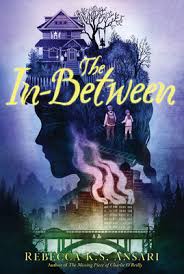
The In-Between

by Rebecca K.S. Ansari

Recommended Audience: Middle School+

Opinion: Recommended w/ Advisories

Rating: 10/10

Synopsis: Cooper’s sister Jess finds an unsolved mystery online about a deadly train crash that happened a hundred years ago. But one passenger was never identified and the only clue about him was a logo on his jacket. Then they find out that the girl that just moved next door has the same logo on her jacket! Cooper and his sister team up to find the truth about the girl.

Lessons learned: The feeling of a boy whose dad died

Advisories: In this book they mention a place called “The In-Between” which is supposed to be between life and the afterlife

ADMIN NOTE: A major setting of this is a time/space known as the “in-between” that is between life and the afterlife. Parents are encouraged to have a discussion with their child about the Islamic concept of the barzakh (the stage between life and the afterlife) to clarify and reinforce Islamic theological concepts in juxtaposition to this book.

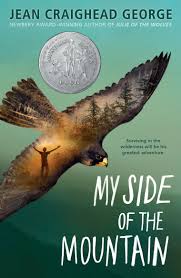
My Side Of The Mountain

Recommended Audience: Middle Grades +

Opinion: Recommended

Rating: 8.5/10 — I enjoyed this book, it was entertaining and fun to read.

Synopsis: Sam runs away to the mountains from his family’s crowded apartment, with just five small items. There he must rely upon himself and the great outdoors to survive.

Lessons Learned: Skills used in nature and the bond made between nature and a boy.

Advisories: In this book there is nothing of concern except for guns mentioned to shoot deer

Note: This list of advisories is not exhaustive and may not capture every instance of questionable content, but rather is intended to give an overall sense of the content of the book.

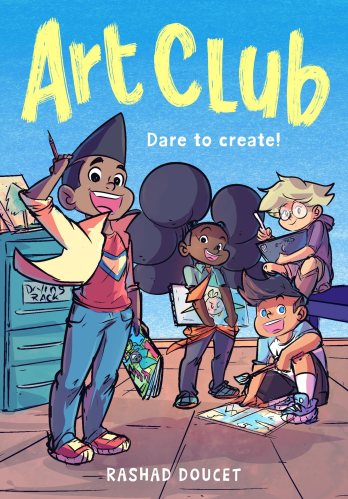
Art Club (Graphic Novel)

Recommended Audience: Middle Grades (Ages 8 – 11) and Up

Opinion: Recommended!

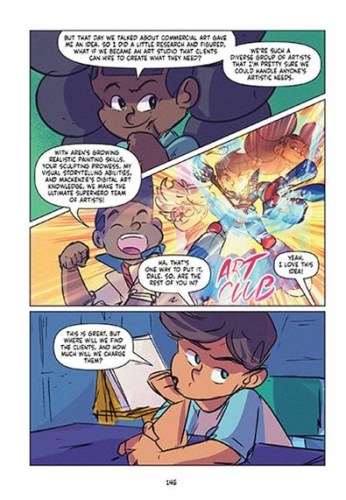
Synopsis: This graphic novel by Rashad Doucet was a delightful read with so much to offer readers! It features Dale Donavan, a comic book and video game loving kid who dreams of a career making comic books of his own one day. Dale’s tenacity and passion for art are captivating as he founds an afterschool Art Club. Dale and his club mates prove that hard work, creativity, and a can-do attitude are a winning formula for success, even in the face of adversity. Respectful, resilient, and creative, Dale is a great role model for readers. Engaging and colorful graphics throughout will capture young and old audiences alike.

Advisories: mild crude language (sucks, blows, jerk, stupid), sneaking around behind parent’s back (w/ consequences and remorse), art creation including drawing human-like characters

Details:

I loved this book! Honestly, there was so much to love, it’s hard to even know where to start. There are so many strong qualities exhibited in this book that I would love for young readers to emulate: respect for authority/elders, empathy, integrity, grit, and so much more! In particular, I really appreciated how the author portrayed moments of resilience for multiple characters in the face of challenges and criticism. There were many incidences throughout the book wherein Dale and the other members of the Art Club need to stay strong in the face of many who question the benefit of an Art Club or a career in the arts. Club Advisor Miss Ja’nae helps the students navigate these tough times with words of comfort and wisdom. When Dale has to stand up to a harsh authority figure (Mr. Ruffins, the Vice Principal), he does so with respect and grace.

Dale’s relationships with his family and friends are incredibly endearing. He is a good friend who occasionally makes mistakes. He makes efforts to repair friendships that he has hurt. Readers learn that even though sometimes characters seem to “have it all,” they are dealing with their own struggles and emotions. Dale’s fond memories of his late grandmother, who was the first one to introduce him to comic books, warmed my heart. He has a loving relationship with his grandfather, who teaches him life lessons of hard-work and responsibility.

I would recommend this book for Middle Grades and up given that it’s an overall very clean read with accessible content for younger readers. I love that a diverse set of characters were portrayed including an articulate, well-rounded main character of color. Readers will walk away from this book with a lot to reflect upon when it comes to pursuing dreams while also ensuring that they can pay their bills in doing so! So many positive messages make this a book I definitely recommend.

Things I Liked:

  • Dale interacting lovingly and respectfully with his grandfather in his multi-generational household
  • portrayal of respect for authority and elders, even when they are unkind
  • information about art and art history presented in a tangible way for younger readers (p.139)
  • characters shown receiving criticism and feedback regarding their art pieces; readers will get to appreciate how this process works and how to receive feedback that is hard to hear

Advisories:

  • reference to Halloween (p. 18)
  • mild crude language (e.g. sucked, blows, stupid, jerk) (p. 55, 57, 96, 143, 173, 189, 197)
  • sneaking around behind parent’s back, consequences and remorse are presented for these actions however (p. 91, 135)

Note: This list of advisories is not exhaustive and may not capture every instance of questionable content, but rather is intended to give an overall sense of the content of the book.

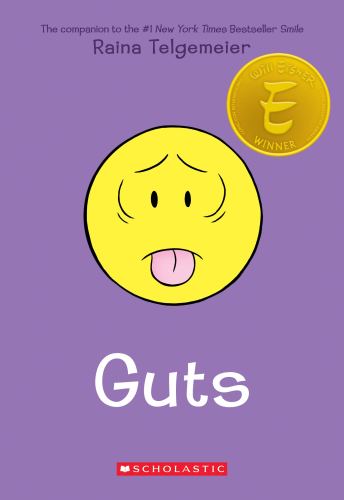
Guts (Graphic Novel)

Recommended Age: Middle School and Up

Opinion: Squeamishly Recommended

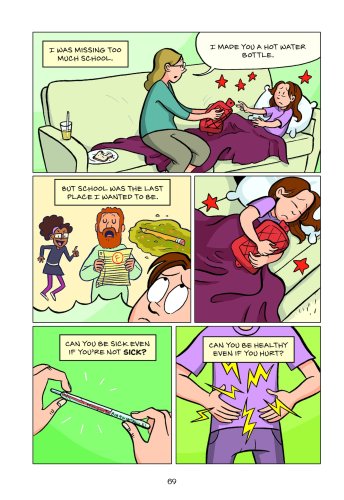
This book contains good messages such as the normalization of attending therapy, supporting peers when they’re ill, and learning coping strategies for anxiety. There’s hardly anything I would call morally questionable, however the constant mentioning of vomiting, going to the bathroom, and upset stomachs makes this reviewer a bit squeamish.

Advisories: cartoon portrayals of vomit, poop, and sitting on the toilet; name-calling and teasing, and a few other minor things

Details:

Guts is not going to be the book for everyone, especially if they’re a bit squeamish like me, but it is still a book I recommend. The overall theme of learning to navigate phobias and anxiety with the support of a therapist is a really important takeaway. I appreciate that more authors are bringing light to mental health issues such as this. Some readers will relate to the main character Raina and how her anxiety manifests in physical symptoms such as upset stomachs and needing to go the bathroom. Other readers will at least be able to learn more about these conditions and hopefully develop empathy and consideration for those who may be affected. This is a book I would keep on my shelf and would recommend to others (unless they’re really squeamish!).

Things I Like:

  • diversity of characters — Example: Raina’s good friend is Korean American and mentions of her food comes up more than once (ex: p. 95)
  • Raina learns different coping strategies from her therapist to deal with her phobias and anxiety (ex: p. 108, 153) and shares these with peers (p. 180-182)
  • classmates make a large get-well poster for an ill peer (p.192-193)
  • normalization of going to therapy (p. 200)

Advisories:

  • cartoon portrayal of vomit (p. 9)
  • Raina is depicted sitting on a toilet with her pants down (p. 30, 42)
  • name-calling and teasing (p. 10, 49, 92)
  • cartoon portrayal of a fecal sample [eww…] (p. 167)
  • discussion about periods (p. 197) — while there’s nothing inherently wrong with this, some parents may not be ready to introduce this idea to their reader
  • character mentions her father gets drunk sometimes and yells (p. 198)

Awkward (Graphic Novel)

Recommended Audience: Middle School +

Opinion: Recommended

Rival school clubs learn to work together after weeks of contention. Readers get to experience doing the right thing when faced with a moral dilemma, putting aside differences to work together, standing up to bullies, and more.

Advisories for mild crude language (e.g. pissed, jerk, idiot), mean-spirited jeering and name-calling (e.g. losers, dork), one reference to the ‘B-word’

Details:

At first glance of the cover, I automatically assumed that this book would have an overarching romance theme. Surprisingly, it doesn’t at all. The story revolves around two students, Penelope and Jaime, and their respective rival art and science clubs. Complete with middle school angst and melodrama, this book is quite humorous and overall wholesome. Aside from the name-calling and pranks, there’s really little to point out in terms of morally questionable content. However, if you wish to avoid stories that have a boy-girl friendship, this will be a book you would want to skip.

I think that middle school readers and up (perhaps even a mature 5th grader) will really enjoy this book. I love that the author relayed the message that art and science don’t have to be exclusive, and that in fact many famous people have been adept at both (p.188-190). Of course, I wish that the author had expanded the examples she gave beyond the Renaissance and Leonardo Da Vinci, but we’re not there yet. The scene where students stood up to the class bullies was a delight (p.208).

Things I Liked:

  • diversity of characters — the brilliant science teacher is a fierce woman of color, Jaime’s mom is in an electric wheelchair, and the newspaper staff reporter is a hijabi
  • resolution of conflict – ultimately the rival science and art clubs work together to achieve something great
  • doing the right thing – when faced with a moral dilemma, main character Penelope makes the right choice
  • consequences for the constant bickering and fighting between the two clubs
  • comedic elements – there were many comedic elements that didn’t come at the expense of character’s feelings

Advisories:

  • a vague inference to mammals having breasts (p.41) — I honestly think this would fly over most kids’ heads unless they’re familiar with mammals, and even then, it’s not really that bad
  • name-calling/teasing throughout (e.g. dork, nerd, losers)
  • mild crude language (e.g. pissed [p.93], stupid)
  • a character’s parent referring to the character’s mom as her “lazy BXXXX mother” (p. 104) — this is literally how it is written (with the X’s as it appears). I honestly don’t see why the author felt the need to include this. They could’ve got the same sentiment across without throwing in the expletive, even if it is written in a covert way.

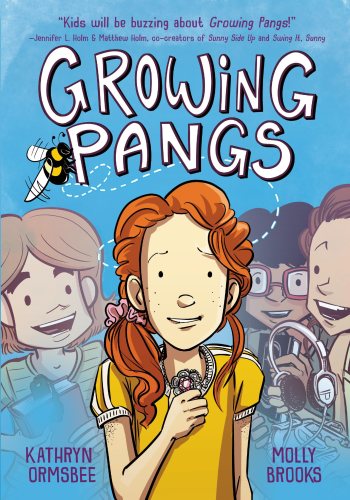
Growing Pangs (Graphic Novel)

Recommended Audience: Middle School and Up

Opinion: Definitely Recommend!

This is a squeaky clean book that portrays the reality of a young girl with obsessive-compulsive disorder. The book offers opportunities for readers to learn about OCD, see how Katie navigates changing friendships, and more!

I was grasping at straws for advisories on this one: a few incidences of mild crude language (e.g. sucks), a few pop culture references, and a mention of girls being too young to drink an alcoholic beverage.

Details:

The first thought I had after reading this graphic novel is “Tell me she has more books like this one!” It was so wholesome, and 99.9% squeaky clean. I came to find that the author does have a few other books, not all will be suitable for our audiences, but that’s a story for another day.

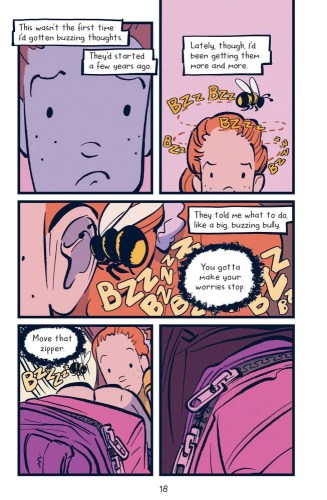
Regarding this book, I definitely recommend it! The plot is based off of the author’s real-life experiences as a homeschooled Middle Schooler living with anxiety and obsessive-compulsive disorder. At first, Katie doesn’t have a diagnosis and doesn’t understand why she feels the need to engage in her compulsions. She refers to her intrusive thoughts as “buzzing” and anthropomorphizes the thoughts as bees swarming around her. It isn’t until the very last bit of the book that the reader learns what these buzzing bees represent. This may be confusing and upsetting for younger readers not familiar with OCD. I would imagine that some young readers might even conjecture that Katie is experiencing whispers from the shayateen. Therefore, I would recommend this book for Middle School or older. If a younger reader wanted to read this book, a guided discussion about OCD would be a sufficient prelude for them to dive in.

As a book reviewer who seeks out books that have very little questionable content that are still relevant and engaging for our youth, I was relieved to find that this book fit the bill. Katie is a wholesome homeschooled girl who attends co-op and church with her family. She loves reading and is excited to be casted into a musical theatre production of Madeline. I can imagine many of the audience reading this may also homeschool, so it is nice to have a book that many of our children will relate to. Katie has to navigate changing friend circles and the jealousies that can come with that. I like how the author relays that many people have their own unique invisible struggles and that Katie is not alone in this way. She has a good relationship with her parents–not one moment of back-talk or disrespect! When Katie finally talks with them about her “buzzing” thoughts, they were supportive and quick to get her the help she needed. While the book ends abruptly with Katie entering a psychologist’s office, the Author’s Note provides clarity and conclusions that the book doesn’t.

Advisories: mile crude language (e.g. suck[s]), occasional pop culture references (Weezer, Harry Potter, *NSync), the girls say they’re “too young” to drink Mint Juleps (alcoholic beverage)

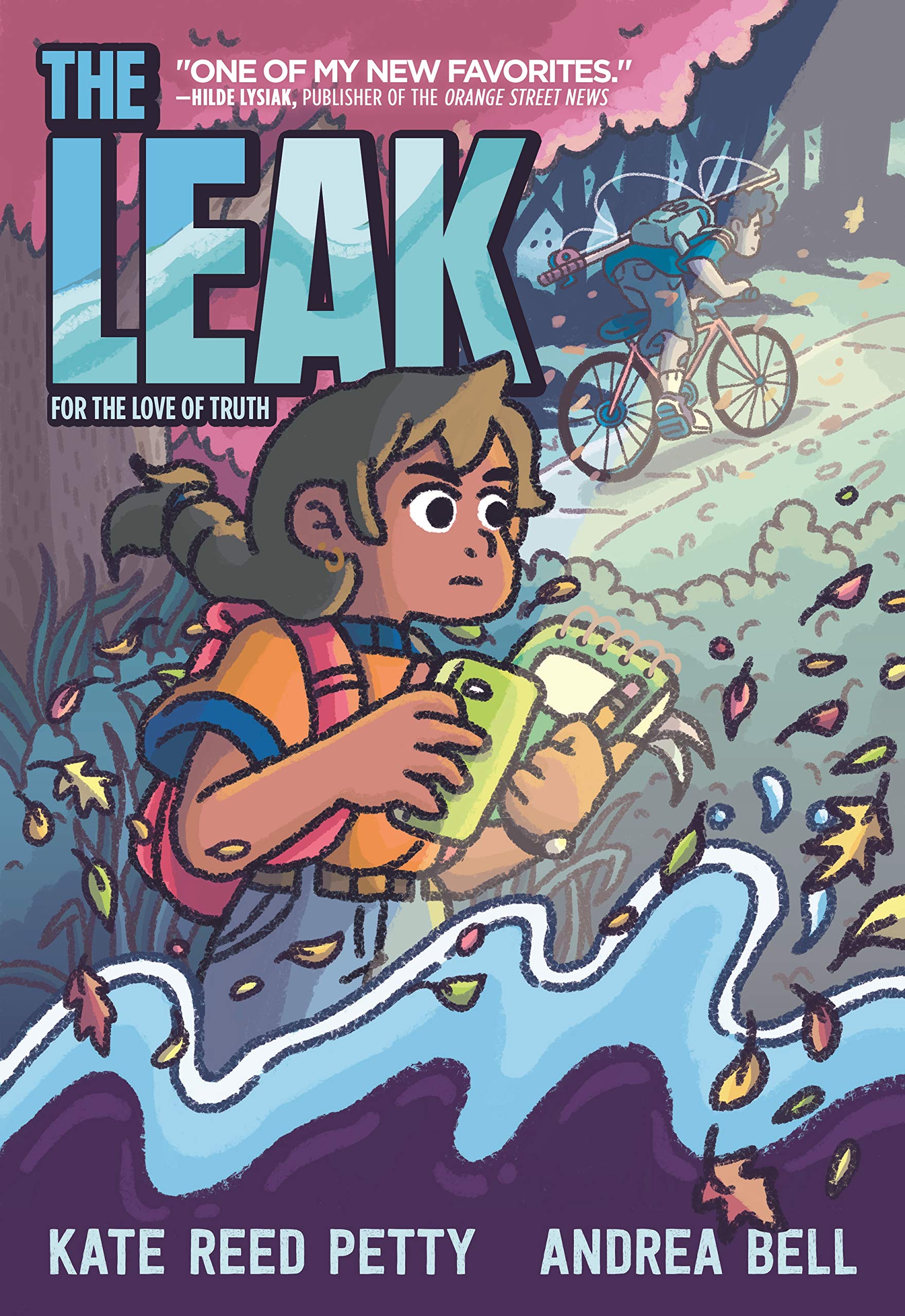
The Leak (Graphic Novel)

Recommended Audience: Ages 9+

Opinion: Recommended with Advisories.

– Recommended for many strong positive messages regarding journalistic integrity, ethics, awareness about the Flint Water Crisis, and more!

– Advisories for a depicted kissing scene and talks about dating.

Details:
I love when a graphic novel talks about real world issues in a way that makes them tangible for young readers. This book does that. It tells a fictional tale of a city that has polluted water and Ruth, a budding journalist who investigates the matter. I love that the book shows how a young person with determination can really make a big impact; a great message for young readers! The book touches on the real-world water pollution situation in Flint, Michigan. There are many more lessons to take away from this book such as having integrity in what we say and write, that there are consequences for actions that we take even if we think we are serving the better good, that we shouldn’t take advantage of others to serve our agendas, and so much more.

Regarding advisories, the book has sporadic discussions about dating and crushes, and the kissing that is depicted between the main character and her crush on pages 207-208. Also, it mentions in the beginning that Ruth’s older college-aged brother will be moving in with his girlfriend, but ultimately that doesn’t end up working out in the end anyways (they break up after moving in together) so there may be a lesson there too.  I believe that despite these few advisories, this book is definitely worth reading and your reader will benefit from having read the book.  As an added bonus, there are multiple hijabis in the illustrations which was a lovely treat.

Was this review helpful?