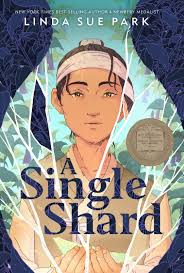
A Single Shard by Linda Sue Park

Recommended Audience: Upper Elementary and Middle School readers/ Children aged 8-14

Opinion– Recommended

Synopsis: Set in 12th century Korea, orphan Tree-ear lives under a bridge in a small village spending his days with a kindly man he calls Craneman. Together, they eke out a meager living foraging and digging through the village’s midden heaps. Despite his love for Craneman, Tree-ear begins looking to the future. He happens upon a famous potter in his village and falls in love with the art of pottery. A Single Shard follows Tree-ear’s journey as he works hard to achieve his dream.

Advisories: mention of the word ‘concubine’ and a group suicide as part of a Korean myth

Details: I came across this title doing research on age-appropriate books to read with my upcoming students. As a historical fiction lover myself, I was intrigued because A Single Shard takes place in a time period I love, but in a place I admittedly know very little about: Korea. After reading the blurb, I added it to my list for review. I recommend this award-winning book on the merit of its writing, character development, and alignment with various Islamic values.

I appreciate Linda Sue Park’s rich writing as well as how she conveyed meaning to me as a reader without dumbing down the language. I could easily imagine myself standing in the forest surrounded by the lush green trees and digging clay on the riverbank next to Tree-ear. Most of all, I appreciate Park’s characterization of Tree-ear, Craneman, and Min the Potter. The descriptions of making and decorating pottery along with day to day life in a medieval Korean village made for an enjoyable read as well.

Character development is another strong aspect to A Single Shard. Readers never find out how old Tree-ear is exactly, but he seems to be between 11-13. He may not be as outrageous or adventurous as some more popular male protagonists, but he possesses grit and resilience. Throughout the story, Tree-ear is faced with moral dilemmas and he frequently falls back on the insight Craneman has given him over the years. More than once, Tree-ear defers to what he thinks Craneman would do as a trusted adult. Tree-ear is also respectful of his elders and never talks back to them. Although Tree-ear’s beliefs do not stem from Islam, they don’t contradict them either. He has a strong sense of right and wrong, respects his elders, refuses to beg for food, and does his best to make sure he does the right thing despite making things harder for himself. Additionally, he keeps his word and works extremely hard not only to work off a debt, but to achieve his dream. Although Craneman was a secondary character, it is plain that his wisdom and careful storytelling impacted Tree-ear in many ways. Additionally, Min undergoes a transformation as he lets go of some serious grief to embrace life.

There are mentions of Buddhism and a Buddhist temple in the story, but there are no explanations or descriptions of practices or rituals. The characters use the temple bells to mark time, but give no indication that they are Buddhists themselves.

Teacher’s Note: This book could lend itself to a plethora of unit studies and interdisciplinary lessons in both a secular or Islamic environment. It could tie into Asian American and Pacific Islander Month or be used to investigate the historical aspects of that time period, specifically for 7th graders. There are also many instances in the story that could spark conversations about right and wrong, societal expectations, grief, friendship, and hard work. Since I focus on novel studies in my class, I plan to read this with my students and study the story structure, vocabulary, and historical period. I look forward to discussing this with my students.

Things I Liked:

  • Craneman and Tree-ear’s genuine concern for one another
  • Tree-ear’s commitment to hard work, a moral code, and his dream
  • View into a different culture
  • The nuances–This book isn’t a difficult read, but it does require a certain level of attention to pick up on the nuances of the story. (Additional teacher’s note: this is a skill many students need to practice.)
  • Tree-ear’s commitment to hard work, a moral code, and his dream

Detailed Advisories:
At one point, Craneman does tell Tree-ear a story of a group of a king’s concubines (pg. 110) that choose to throw themselves off a cliff rather than be captured by the enemy. The story is told as an example of courage, but Craneman does go on to tell Tree-ear that “…leaping into death is not the only way to show true courage” (pg. 111). This may necessitate a conversation about how suicide is haram and not an option for us as Muslims, but I do like that Craneman suggests there are other ways to deal with our problems.

Final Thoughts: It’s a good story with no inappropriate words or actions, many characters have redeemable qualities. Furthermore, it gives opportunities for discussion about how to handle situations.

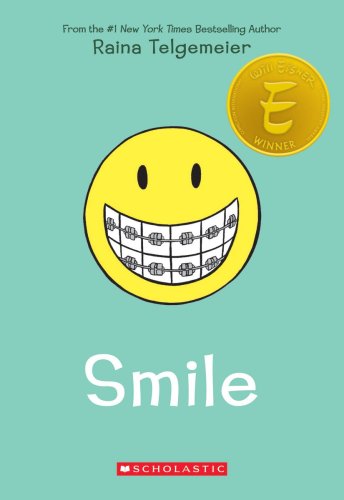
Smile (Graphic Novel)

Recommended Audience*: None.

Opinion: Do not recommend.

Synopsis: A perfect example of why book screening is really important in today’s day and age, Smile looks innocuous with it’s brace-faced smile emoji. What readers might not be aware of is how crushes are a central theme of this book, and therefore one that I didn’t feel comfortable keeping in my library.

Advisories: name-calling/teasing, romantic interests/crushes (major theme), mixed gender interactions (i.e. school dance, parties), cruel pranks, kissing, and more

Details:

I feel like Raina Telgemeier books are hit-or-miss when it comes to being appropriate for our readers. I love that she has made several books on real-life struggles that she had growing up. Many readers will be able to relate with the challenges of middle school and beyond. I can imagine so many readers find resonance and healing by reading her words. Unfortunately, many of her books however contain themes that many in our community feel are not appropriate such as a heavy emphasis on romantic interests/crushes as well as the introduction of LGBTQ+ characters and romance.

In this instance, this is a book that I couldn’t deem appropriate for our readers. While I love all that Telgemeier shares about her experience with a life-altering dental injury, I couldn’t justify recommending this book considering the other major theme: crushes/romantic interests. Page after page discusses different character’s romantic interests, their dreams of their first kiss, and even depicts a scene of playing “Spin the Bottle” at a mixed-gender party.

It’s a shame because there are some good elements here. I really appreciated how Telgemeier portrays the impacts of school bullies, even those who claim to be “friends.” I love how in the end, main character Raina stands up for herself and finds a new circle of friends, who actually build her up rather than tearing her down and making her the victim of their cruel pranks. Middle school and the beginning of high school are such trying times for so many. I think that readers will definitely empathize with Raina’s experience and hopefully take away that they would never want to be responsible for someone else feeling how she did.

Despite the benefits here, the crushes/romantic elements were too much for me and I didn’t feel like I could justify recommending this book to others, or encouraging my middle schooler to read it.

Things I Liked:

  • depicting the harms of bullying/teasing
  • sharing the feelings related to having an injury that impacts your physical appearance
  • standing up to bullies (p. 191)
  • finding your own way and friends, instead of trying to fit in with the crowd (p. 206-7)

Detailed Advisories:

  • reference to Easter (p. 4)
  • blood depicted (p. 9)
  • mild crude language– jerk (p. 27)
  • name-calling (p. 29, 53)
  • girls expressing desire to hang out with boys (p. 51)
  • main character expressing that she wishes boys liked her (p. 52)
  • romantic interests/crushes (recurring) (p. 60-1, 79, 83, 131-2, 135)
  • teasing (p. 83, 185)
  • discussion about the tooth fair (p. 99-101)
  • dating/girlfriends-boyfriends (p. 112, 114, 155
  • gender interactions – school dance, parties (p. 119-20, 158-62, 209-12)
  • kissing (p. 132, 158-9)
  • cruel pranks (p. 136-139, 186-7)
  • bare midrift & “tube top” (p. 138)
  • flirting (p. 156)

Note: This list of advisories is not exhaustive and may not capture every instance of questionable content, but rather is intended to give an overall sense of the content of the book.

*Note: While we do not recommend this book, the intended audience indicated by the author/publisher is Middle School.

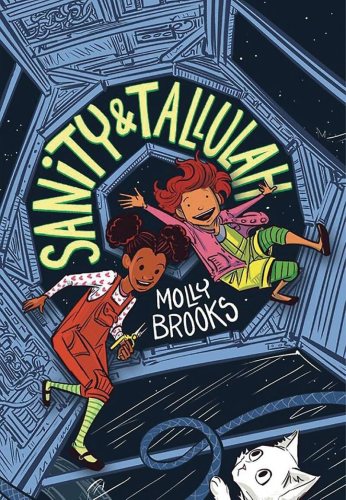
Sanity & Tallulah (Graphic Novel)

Book 1 of the Sanity & Tallulah Series* by Molly Brown

* This review is ONLY for the book described in this post, NOT the series in its entirety.

Recommended Audience: Middle School and Up

Opinion: Recommended w/ Advisories

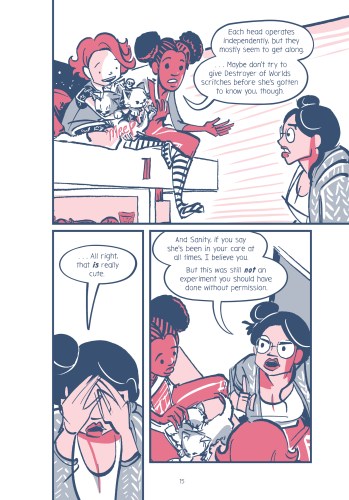
Synopsis: This action-packed graphic novel would be a great find for science fiction lovers ages 10 years+. Readers tag along as best friends Tallulah and Sanity work to figure out who–or what–is wreaking havoc on their beloved space station. Could it be Sanity’s recently-escaped science experiment–a cuddly three-headed kitten–or something else? While there aren’t many overt moral lessons, the story is entertaining and enriching. If your reader enjoyed the cat-chasing antics of novel Grounded by Aisha Saeed, they’ll likely enjoy this book as well.

Advisories: lying, sneaking around, one LGBT+ inference, moderate crude language

Details:

This was a fun, engaging read filled with action and fun sci-fi STEM jargon. Sanity and Tallulah are best friends and partners-in-adventure living on a futuristic space station. When someone, or something, starts causing damage throughout the station, they suspect it might be Sanity’s latest science experiment: a three-headed kitten that has escaped from the lab! The two girls quest to find their fugitive furry friend without getting in to too much trouble along the way.

This was a captivating graphic novel that I would encourage my Middle Schooler to read. Engaging storytelling, strong female leads, STEM representation, and opportunities for critical thinking make this book of value for readers. I would recommend it for even younger grades if it weren’t for the moderate crude language (damn, hell, etc.) and higher-level sci-fi concepts and vocabulary that might leave them a bit lost. The illustrations’ limited color scheme and frequent transitions from dark to light palettes left something to be desired for me, however. If I were to put this on my shelf at home or in an Islamic school library, I’d censor the one LGBT+ inference found on p. 157.

Things I Liked:

  • engaging, fast-paced storytelling
  • diverse cast of characters
  • STEM/sci-fi related themes and vocabulary
  • strong female friendship
  • fun adventure with an element of mystery

Detailed Advisories:

  • sneaking around/trespassing (recurring) (p. 25, 32, 119)
  • death of pets (p. 56-57)
  • lying (p. 59)
  • moderate crude language (heck, damn, jerk, hell) (p. 125, 130-1, 143, 145, 179, 222)
  • one LGBT+ inference — male character says he had a crush on another male character in grade school (p. 157)
  • dead animals (p. 166)

Advisories Note: This list of advisories is not exhaustive and may not capture every instance of questionable content, but rather is intended to give an overall sense of the content of the book.

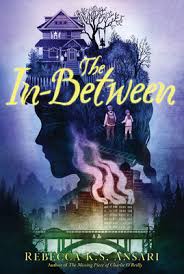
The In-Between

by Rebecca K.S. Ansari

Recommended Audience: Middle School+

Opinion: Recommended w/ Advisories

Rating: 10/10

Synopsis: Cooper’s sister Jess finds an unsolved mystery online about a deadly train crash that happened a hundred years ago. But one passenger was never identified and the only clue about him was a logo on his jacket. Then they find out that the girl that just moved next door has the same logo on her jacket! Cooper and his sister team up to find the truth about the girl.

Lessons learned: The feeling of a boy whose dad died

Advisories: In this book they mention a place called “The In-Between” which is supposed to be between life and the afterlife

ADMIN NOTE: A major setting of this is a time/space known as the “in-between” that is between life and the afterlife. Parents are encouraged to have a discussion with their child about the Islamic concept of the barzakh (the stage between life and the afterlife) to clarify and reinforce Islamic theological concepts in juxtaposition to this book.

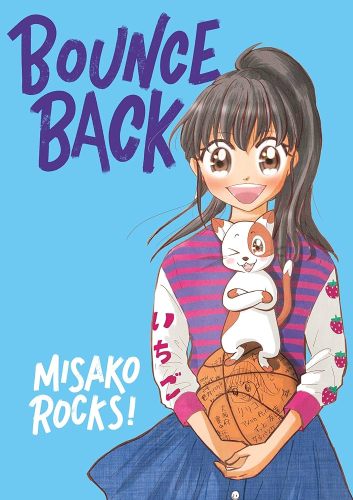
Bounce Back (Graphic Novel)

Recommended Audience: None.

Opinion: Do not recommend.

Synopsis: This graphic novel did not offer much in way of neither entertainment nor moral value. While the book does not contain egregiously questionable content, nor is it plentiful, the fact that the story itself was hardly engaging and the moral takeaways were minimal made this book a ‘pass’ for me.

Advisories: bullying/teasing, mild crude language, dating, kissing, and more

Note: I write this review with the caveat that I am far from a connoisseur when it comes to manga. I don’t read much of it, and I don’t particularly seek it out. A manga fan might have an entirely different opinion on this book.

Details:

This manga-style graphic novel has readers following along as Lilico, a middle school girl from Osaka who loves basketball, migrates from Japan to the United States. Lilico struggles to adjust to her new home and has to deal with harsh bullies as she tries to find her way. Lilico’s talent in basketball paves a path for her to gain popularity, but at what cost? Lilico must remind herself what it means to be a good friend and find ways to build bridges between peer groups.

This book fell flat for me. I found the melodrama of the book to be off-putting, but I recognize this can be a trait of manga. I felt that Lilico’s strategies to gain friends and repair relationships were weak at best and not strategies I would want my own children to employ. In order to win over her bully, Lilico basically proves herself on the basketball court and becomes a major asset to the girls basketball team. In order to build bridges between two rivals, she encourages Nala to design and create a team mascot costume for the school. I don’t like that in both scenarios, the characters had to offer some type of service/skill in order to curry favor with those who were treating them badly.

Sometimes if the moral takeaways and overall value of the book in one fashion or another is compelling enough, I can forgive some indiscretions in terms of questionable content. Ultimately, this book did not meet that threshold for me therefore I do not recommend it.

Things I Liked:

  • Lilico learned to stand up for herself against bullies but not in a particularly compelling way — she basically proved her value to them via her basketball talent
  • Lilico mended her friendship with Nala
  • Learning about Japanese culture (food, school experiences, clothing, beliefs, etc.)

Advisory Details:

  • references to being someone else in a “past life” (p. 15)
  • bullying, teasing (recurring)
  • mild crude language — shut up, crap
  • “guardian spirit” character that possesses a cat and assists Lilico (introduced on p. 50 and recurring thereafter)
  • boy and girls hanging out unsupervised in a character’s bedroom (p. 58)
  • eating pork (p. 85)
  • reference to a specific food believed to bring good luck (p.86)
  • boy and girls sleeping over together (p. 88)
  • reference to getting a boyfriend, crushes (p. 94, 139)
  • fan-girling over bands (p. 139)
  • dating (p. 176-7, 190-2)
  • boy-girl hugging (p. 218)
  • boy-girl kissing (p. 255)

Note: This list of advisories is not exhaustive and may not capture every instance of questionable content, but rather is intended to give an overall sense of the content of the book.

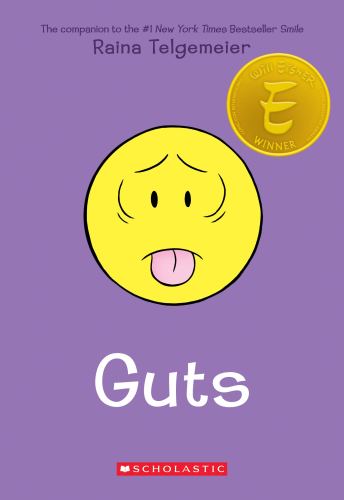
Guts (Graphic Novel)

Recommended Age: Middle School and Up

Opinion: Squeamishly Recommended

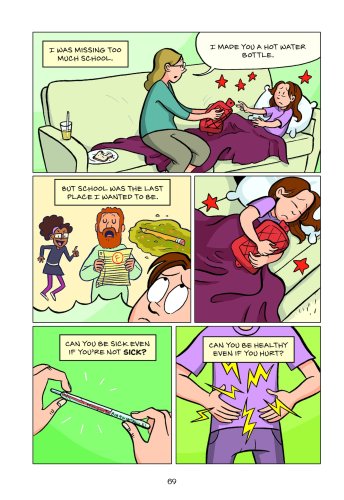
This book contains good messages such as the normalization of attending therapy, supporting peers when they’re ill, and learning coping strategies for anxiety. There’s hardly anything I would call morally questionable, however the constant mentioning of vomiting, going to the bathroom, and upset stomachs makes this reviewer a bit squeamish.

Advisories: cartoon portrayals of vomit, poop, and sitting on the toilet; name-calling and teasing, and a few other minor things

Details:

Guts is not going to be the book for everyone, especially if they’re a bit squeamish like me, but it is still a book I recommend. The overall theme of learning to navigate phobias and anxiety with the support of a therapist is a really important takeaway. I appreciate that more authors are bringing light to mental health issues such as this. Some readers will relate to the main character Raina and how her anxiety manifests in physical symptoms such as upset stomachs and needing to go the bathroom. Other readers will at least be able to learn more about these conditions and hopefully develop empathy and consideration for those who may be affected. This is a book I would keep on my shelf and would recommend to others (unless they’re really squeamish!).

Things I Like:

  • diversity of characters — Example: Raina’s good friend is Korean American and mentions of her food comes up more than once (ex: p. 95)
  • Raina learns different coping strategies from her therapist to deal with her phobias and anxiety (ex: p. 108, 153) and shares these with peers (p. 180-182)
  • classmates make a large get-well poster for an ill peer (p.192-193)
  • normalization of going to therapy (p. 200)

Advisories:

  • cartoon portrayal of vomit (p. 9)
  • Raina is depicted sitting on a toilet with her pants down (p. 30, 42)
  • name-calling and teasing (p. 10, 49, 92)
  • cartoon portrayal of a fecal sample [eww…] (p. 167)
  • discussion about periods (p. 197) — while there’s nothing inherently wrong with this, some parents may not be ready to introduce this idea to their reader
  • character mentions her father gets drunk sometimes and yells (p. 198)

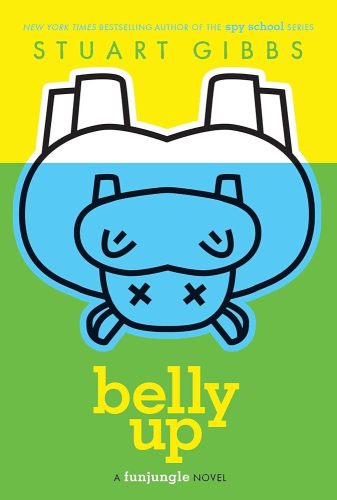
Belly Up

Book #1 of the FunJungle Series by Stuart Gibbs

Recommended Audience: 5th Grade +

Opinion: Neutral w/ Advisories

While this action-packed mystery novel has some benefits such as teaching readers about animals and conservation, opportunities to think critically, and developing courage and resilience, it does contain some moderate foul language and other questionable content that may make this a “pass” for some families. There is definitely entertainment value here, but if you’re looking for a squeaky clean book that will greatly develop the moral character of your reader, this isn’t it.

Advisories: moderate foul language (a**, da**, cr**, pi**ed off, etc.), lying, doing unethical/illegal things to serve a “greater good” (with consequences), an underwear-clad swimming scene, boy-girl friendships, mild gore/gross-out scenes, etc. (See below for details.)

Details:

Stuart Gibbs is a prolific writer with several series supposedly geared towards middle grades. I personally feel that his writing is generally better suited for fifth grade and up. One reason is that unfortunately Gibbs often uses some moderate crude language throughout his writing, which is a shame because I really don’t feel that it’s necessary. It doesn’t add value to the book and makes the books less appropriate for our readers. I’ve read that he cleans up the language a bit in the subsequent books of this series, but I can’t personally attest to that at this point.

Belly Up is the first book in the FunJungle series of books. It is the tale of twelve-year-old Teddy Fitzroy who lives just outside a large zoo / amusement park. When the beloved park mascot, Henry Hippo, abruptly dies, Teddy suspects there’s more to the story. His sleuthing takes him on a suspenseful adventure filled with a whodunit mystery, harrowing close-calls, and more.

The entertainment value of this book is high; my middle schooler can’t get enough. For my taste, the questionable content is just barely palatable. Do I wish the author didn’t include the swear words and the underwear swimming scene? ABSOLUTELY. Would I ban my middle schooler from reading this book because of these things? No. Therefore, I gave this a “neutral w/ advisories” rating. I might have to use some white-out before sticking this one on the shelf.

Things I Liked:

  • animal facts and information about conservation efforts throughout
  • occasional utilization of higher level vocabulary (e.g. deign, groused, rube, segued, glibness, dirge, officious)
  • Teddy is determined to get to the truth and hold those responsible to account — admirable traits
  • suspenseful mystery keeps readers guessing until the end; great for critical thinking
  • humorous and entertaining; held my picky middle school reader’s attention
  • unethical actions have consequences
  • a close and loving relationship is portrayed between Teddy and his parents

Advisory Details:

  • moderate crude language (screwed, pissed off, bastard, idiot, jerk, crap, damn, ass)
  • practical jokes reference (p. 7)
  • fat-shaming/disrespect to an adult/authority figure (p.17)
  • sneaking around/ disobeying authority (p. 38, p. 145)
  • reference to possible suicide (of an animal) (p. 43)
  • a scene where Teddy and Summer go swimming in their underwear (p.95)
  • lying (a few separate incidences to avoid getting in trouble) (p. 103, 106)
  • glorification/justification of lying as a means towards an end (p. 107)
  • mild crush inferences (p. 115, p. 294)
  • reference to evolution, specifically reptiles being the ancestors of birds (p. 117)
  • reference to herpes without any further details, not specific to a type of herpes (p. 133)
  • reference to someone who ‘reeked of marijuana’ (p. 155)
  • describes autopsy of a dead hippo
  • gory scene where hippo guts get all over the audience (p. 251)

Note: This list is not exhaustive and may not capture every instance of questionable content, but rather is intended to give an overall sense of the content of the book.

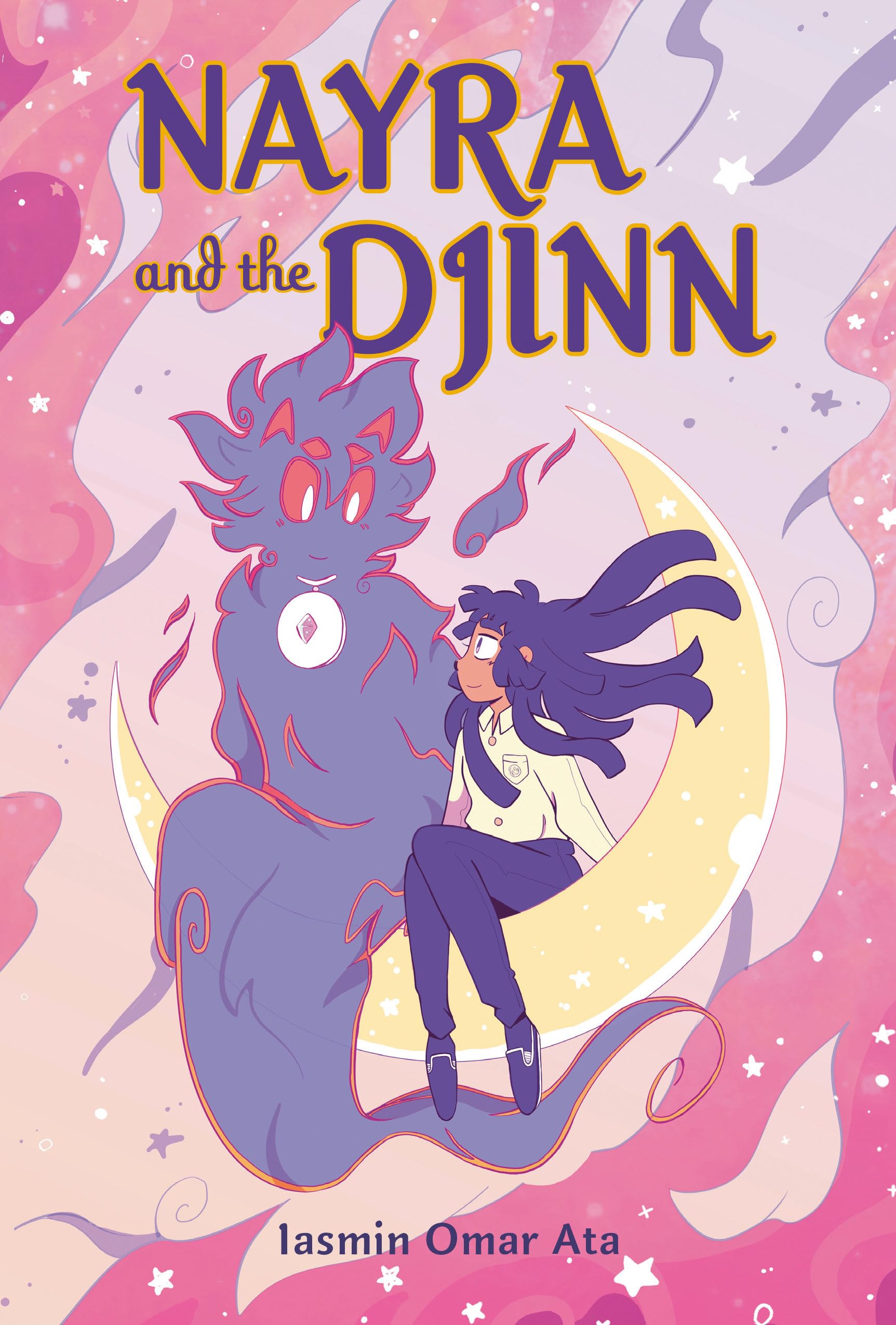
Nayra and the Djinn (Graphic Novel)

Recommended Audience: None.

Opinion: DO NOT RECOMMEND.

The conflation of what is theologically sound info about jinn and what is the author’s fantasy writing can cause confusion for young Muslim readers, even teens. Overall plot isn’t great anyways.

Details:

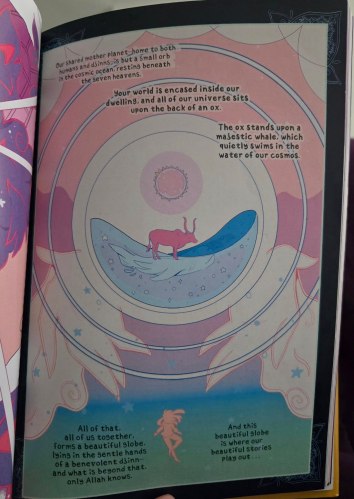
While I loved that the Muslim characters of this book are shown observing religious practices such as fasting and prayer, I feel that the liberties taken regarding jinn mixed with accurate info about jinn could be confusing for our Muslim readers. As an adult, albeit not extremely well versed in matters of the Jinn, there were times that I had to do some research to see if what was being portrayed in the book is actually a part of our faith or not; I would hate for a young Muslim reader to have to navigate that same space. For example, there is a section that talks about the nature of the universe and it being placed on the back of a whale. (See picture.) That struck me as odd and when I did research on it, it’s based on a fabricated hadith. See Sapience Institute’s video regarding this fabricated hadith here if you’re interested.

Furthermore, the storyline is honestly not that great. The main character Nayra has an extremely clingy friend named Rami who is upset with her for not spending enough time together. Nayra is constantly called ‘baba ganoush’ by a bully and wants to switch schools. There’s not a lot of depth to the overall plot and readers won’t take away much in regards to lessons learned after reading this book.

Lastly, some families may also take issue with the fact that the author Iasmin Omar Ata identifies as non-binary. In the book it is stated that jinn do not have gender and the main jinn character also is non-binary and uses they/them pronouns. I personally focus more on the content of books, rather than the author’s identity but I can appreciate how others would consider this when selecting books.

Awkward (Graphic Novel)

Recommended Audience: Middle School +

Opinion: Recommended

Rival school clubs learn to work together after weeks of contention. Readers get to experience doing the right thing when faced with a moral dilemma, putting aside differences to work together, standing up to bullies, and more.

Advisories for mild crude language (e.g. pissed, jerk, idiot), mean-spirited jeering and name-calling (e.g. losers, dork), one reference to the ‘B-word’

Details:

At first glance of the cover, I automatically assumed that this book would have an overarching romance theme. Surprisingly, it doesn’t at all. The story revolves around two students, Penelope and Jaime, and their respective rival art and science clubs. Complete with middle school angst and melodrama, this book is quite humorous and overall wholesome. Aside from the name-calling and pranks, there’s really little to point out in terms of morally questionable content. However, if you wish to avoid stories that have a boy-girl friendship, this will be a book you would want to skip.

I think that middle school readers and up (perhaps even a mature 5th grader) will really enjoy this book. I love that the author relayed the message that art and science don’t have to be exclusive, and that in fact many famous people have been adept at both (p.188-190). Of course, I wish that the author had expanded the examples she gave beyond the Renaissance and Leonardo Da Vinci, but we’re not there yet. The scene where students stood up to the class bullies was a delight (p.208).

Things I Liked:

  • diversity of characters — the brilliant science teacher is a fierce woman of color, Jaime’s mom is in an electric wheelchair, and the newspaper staff reporter is a hijabi
  • resolution of conflict – ultimately the rival science and art clubs work together to achieve something great
  • doing the right thing – when faced with a moral dilemma, main character Penelope makes the right choice
  • consequences for the constant bickering and fighting between the two clubs
  • comedic elements – there were many comedic elements that didn’t come at the expense of character’s feelings

Advisories:

  • a vague inference to mammals having breasts (p.41) — I honestly think this would fly over most kids’ heads unless they’re familiar with mammals, and even then, it’s not really that bad
  • name-calling/teasing throughout (e.g. dork, nerd, losers)
  • mild crude language (e.g. pissed [p.93], stupid)
  • a character’s parent referring to the character’s mom as her “lazy BXXXX mother” (p. 104) — this is literally how it is written (with the X’s as it appears). I honestly don’t see why the author felt the need to include this. They could’ve got the same sentiment across without throwing in the expletive, even if it is written in a covert way.

Becoming Brianna (Graphic Novel)

Recommended Audience: None.

Opinion: Pass. Not recommended.

While this book provides an opportunity to learn about Jewish culture, specifically bat mitzahs, Bri’s disinterest in her faith and other advisories make this book a no-go for me.

Details:

This is another book I had a hard time with. On the one hand, I believe that it’s really important for our readers to learn about other faiths and cultures, and their respective traditions. And for that reason, I liked this book. This story is about title character Brianna preparing for her bat mitzvah, a Jewish rite of passage. As she prepares, she questions her reasons behind agreeing to the bat mitzvah in the first place and if this tradition, and furthermore faith, is something she really believes in.

As a parent of faith whose roots are intertwined with Judaism and Christianity, Brianna’s resistance to learn and observe her faith is a bit off-putting. I wouldn’t want my own children to behave in such as way when it comes to Islam. When Brianna narrates how she “put her foot down” and refused to attend religious school in fifth grade because she had “more important things to do,” it bothered me, because again, this is not something I would want my own child to emulate in regards to their own faith.

On the flip side, as a Muslim parent, I don’t feel AS challenged by Brianna’s questioning of Judaism and Jewish rites. Brianna’s unwillingness to “blindly follow” is not threatening to me. It does get a bit complicated however because some of her sacrilegious thoughts regarding Judaism, carry over into Islam as we share many prophets (peace be upon them all) and narratives.

As an example, when describing her Jewish prayer book, she says “It contains many, many, many paragraphs about thunder, lightning, dense clouds, smoke, blasts of horns, and mountains trembling… all because people are getting their town laws and tax codes. Not only that, they decide to just accept it all. Blindly. Without questioning anything.” (p.161) The sarcastic tone used when referring to God’s commandments to the Jewish people didn’t sit well with me.

Ultimately, I have to ask myself if the value the book brings to the table is worth dealing with the issues it contains. In this case, I leaned with “no.” In addition to the concerns above, other advisories (outlined below) pushed this book just over the edge for me. I think there are other ways for our children to learn about other faiths and cultures in a respectful, engaging way. This book doesn’t have to be part of that journey. This book is far from the worst when it comes to questionable content, but if I’m in the position to say which books I would put in front of our Muslim kids, this is one that I wouldn’t recommend.

Things I Liked:

  • Brianna is a child of divorcees, bouncing between her two parents’ households. I appreciated that readers who might be living in similar situations will be able to relate
  • learning about the traditions and vocabularies of a bat mitzvah; it was insightful to see all that goes into the planning of the event and Bri’s mom’s antics were humorous
  • overall there wasn’t a heavy emphasis on topics that I would consider inappropriate
  • Bri’s rabbi seems friendly and approachable; I liked this because sometimes religious characters can be portrayed otherwise, simply because they are religious

Advisories:

  • an infographic seems to depict a variety of “non-traditional” families, including gay and lesbian couples (p. 18)
  • Brianna narrates that in fifth grade, she “put her foot down” and refused to go to religious school because she had “more important things to do” and “wasn’t that into it” — I’m concerned this is sending the wrong message to our readers (p. 20)
  • talks about liking boys (p. 35, 37, p. 82)
  • Brianna questions her beliefs in Judaism and its rituals (p. 71)
  • Brianna’s aunt talks about being an atheist (p. 115)
  • Bri’s father reflects on when he asked a girl out on a date (p. 127-129)
  • depiction of physical contact (hugs) between girls and guys (p. 138)
  • sacrilegious talks about God’s interactions and commandments with the Jews (p. 161)
  • party of middle school boys and girls dancing together depicted (p. 301-309)